


The Sky Map of Mbwila, 2024. Mixed media: handmade palm fibers, plastic fibers, industrial fabrics, leatherette, natural pigments, and acrylic, 16,5 x 6 m
[+]The Sky Map of Mbwila, 2024. Mixed media: handmade palm fibers, plastic fibers, industrial fabrics, leatherette, natural pigments, and acrylic, 16,5 x 6 m
[-]The Sky Map of Mbwila, 2024. Mixed media: handmade palm fibers, plastic fibers, industrial fabrics, leatherette, natural pigments, and acrylic, 16,5 x 6 m
[+]The Sky Map of Mbwila, 2024. Mixed media: handmade palm fibers, plastic fibers, industrial fabrics, leatherette, natural pigments, and acrylic, 16,5 x 6 m
[-]The Sky Map of Mbwila, 2024. Mixed media: handmade palm fibers, plastic fibers, industrial fabrics, leatherette, natural pigments, and acrylic, 16,5 x 6 m
[+]The Sky Map of Mbwila, 2024. Mixed media: handmade palm fibers, plastic fibers, industrial fabrics, leatherette, natural pigments, and acrylic, 16,5 x 6 m
[-]Kalisya 3, The Thousand Faces series, 2024. Sculptures in Gmelina wood, special columbite-tantalite acrylic paint, banana floral stem fibres, copper
[+]Kalisya 3, The Thousand Faces series, 2024. Sculptures in Gmelina wood, special columbite-tantalite acrylic paint, banana floral stem fibres, copper
[-]Kalisya 4. The Thousand Faces series, 2024. Sculptures in Gmelina wood, special columbite-tantalite acrylic paint, banana floral stem fibres, copper
[+]Kalisya 4. The Thousand Faces series, 2024. Sculptures in Gmelina wood, special columbite-tantalite acrylic paint, banana floral stem fibres, copper
[-]“He would stuff bits of obscene phrases into every gesture.”Soni Labou Tansi. The Pedestal is a Flowerpot series, 2025. Print and acrylic paint on Hahnemühle Torchon paper, 285 g/m²
[+]“He would stuff bits of obscene phrases into every gesture.”Soni Labou Tansi. The Pedestal is a Flowerpot series, 2025. Print and acrylic paint on Hahnemühle Torchon paper, 285 g/m²
[-]Exhibition view, Une archéologie de la nuit
[+]Exhibition view, Une archéologie de la nuit
[-]Exhibition view, Une archéologie de la nuit
[+]Exhibition view, Une archéologie de la nuit
[-]Kalisya 2. The Thousand Faces series, 2024. Sculptures in Gmelina wood, special columbite-tantalite acrylic paint, banana floral stem fibres, copper
[+]Kalisya 2. The Thousand Faces series, 2024. Sculptures in Gmelina wood, special columbite-tantalite acrylic paint, banana floral stem fibres, copper
[-]“The forest was a school to which they often came to hear what it had to tell them: You take, you give, for if you only take without giving back, you will leave the giver exhausted unto death.” Ngũgĩ wa Thiong’o. The Pedestal is a Flowerpot series, 2025. Print and acrylic paint on poster paper, 210 g/m²
[+]“The forest was a school to which they often came to hear what it had to tell them: You take, you give, for if you only take without giving back, you will leave the giver exhausted unto death.” Ngũgĩ wa Thiong’o. The Pedestal is a Flowerpot series, 2025. Print and acrylic paint on poster paper, 210 g/m²
[-]Sketch for the sculpture series Kalisya, The Thousand Faces, 2024.
[+]Sketch for the sculpture series Kalisya, The Thousand Faces, 2024.
[-]“The measure of a man is what he does with power.” Plato. The Pedestal is a Flowerpot series, 2025. Print and acrylic paint on Hahnemühle Torchon paper, 285 g/m²
[+]“The measure of a man is what he does with power.” Plato. The Pedestal is a Flowerpot series, 2025. Print and acrylic paint on Hahnemühle Torchon paper, 285 g/m²
[-]“Order is the pleasure of reason, but disorder is the delight of the imagination.” Paul Claudel. The Pedestal is a Flowerpot series, 2025. Print and acrylic paint on Hahnemühle Torchon paper, 285 g/m².
[+]“Order is the pleasure of reason, but disorder is the delight of the imagination.” Paul Claudel. The Pedestal is a Flowerpot series, 2025. Print and acrylic paint on Hahnemühle Torchon paper, 285 g/m².
[-]“Here once lay Keta. Now her golden girls Erode into the arms Of strange towns.”Kwesi Brew. The Pedestal is a Flowerpot series. 2025. Print and acrylic paint on Hahnemühle Torchon paper, 285 g/m²
[+]“Here once lay Keta. Now her golden girls Erode into the arms Of strange towns.”Kwesi Brew. The Pedestal is a Flowerpot series. 2025. Print and acrylic paint on Hahnemühle Torchon paper, 285 g/m²
[-]“Stories are not made from common and routine occurrences. Impressionist tales suggest that we learn more from the exceptional than from the topical. In some quarters this is heresy.”John Van Maanen. The Pedestal is a Flowerpot series, 2025. Acrylic on 300 g Canson paper
[+]“Stories are not made from common and routine occurrences. Impressionist tales suggest that we learn more from the exceptional than from the topical. In some quarters this is heresy.”John Van Maanen. The Pedestal is a Flowerpot series, 2025. Acrylic on 300 g Canson paper
[-]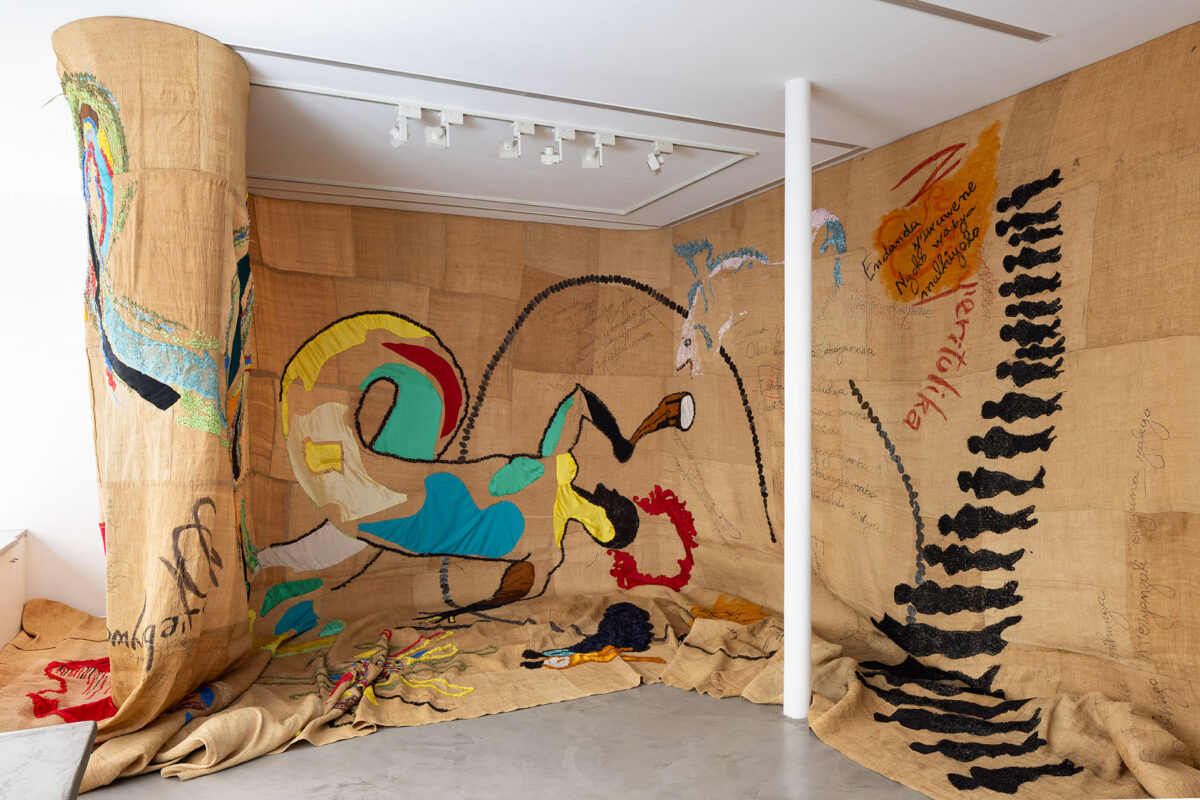
The Sky Map of Mbwila, 2024. Mixed media: handmade palm fibers, plastic fibers, industrial fabrics, leatherette, natural pigments, and acrylic, 16,5 x 6 m
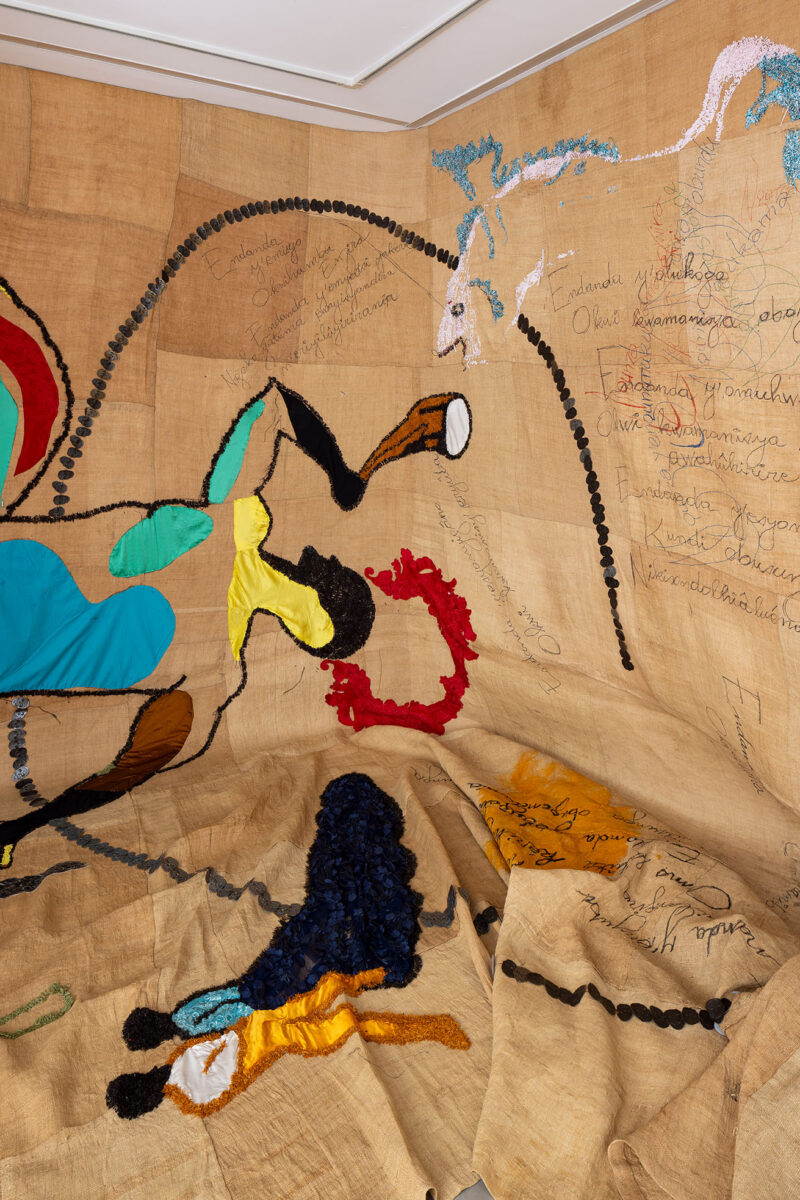
The Sky Map of Mbwila, 2024. Mixed media: handmade palm fibers, plastic fibers, industrial fabrics, leatherette, natural pigments, and acrylic, 16,5 x 6 m
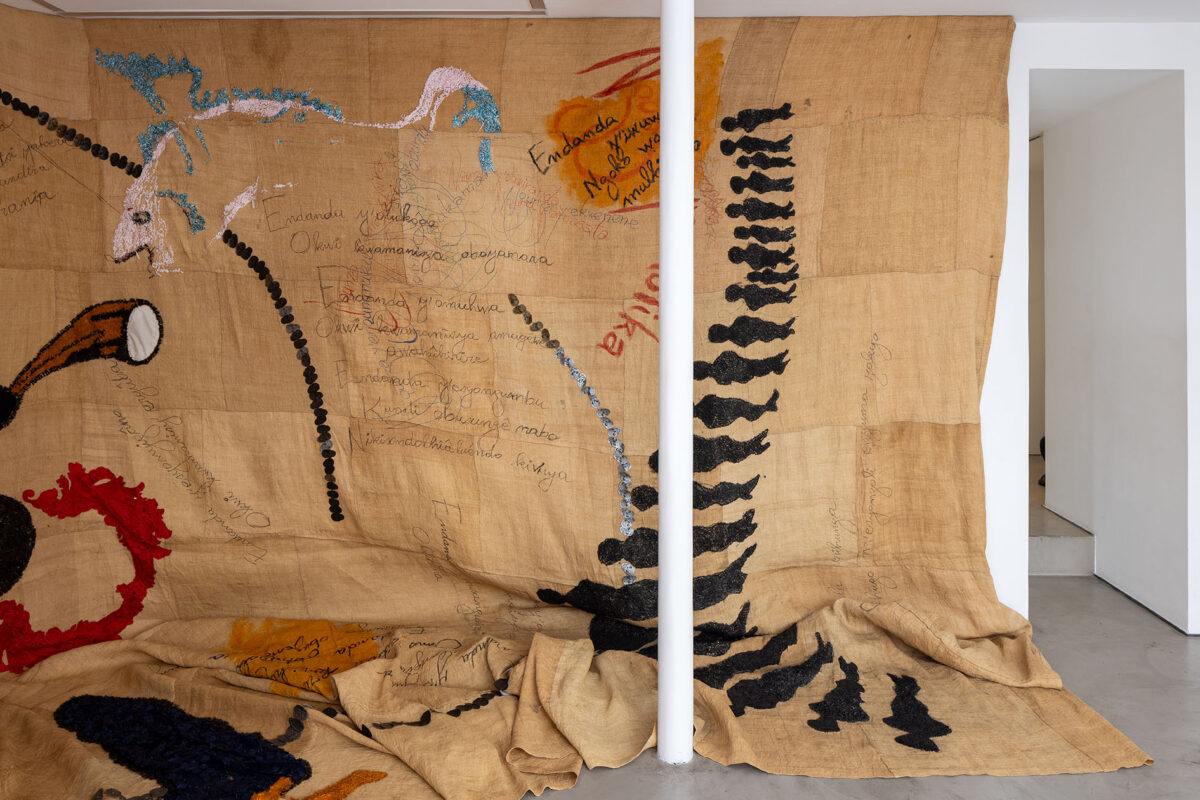
The Sky Map of Mbwila, 2024. Mixed media: handmade palm fibers, plastic fibers, industrial fabrics, leatherette, natural pigments, and acrylic, 16,5 x 6 m
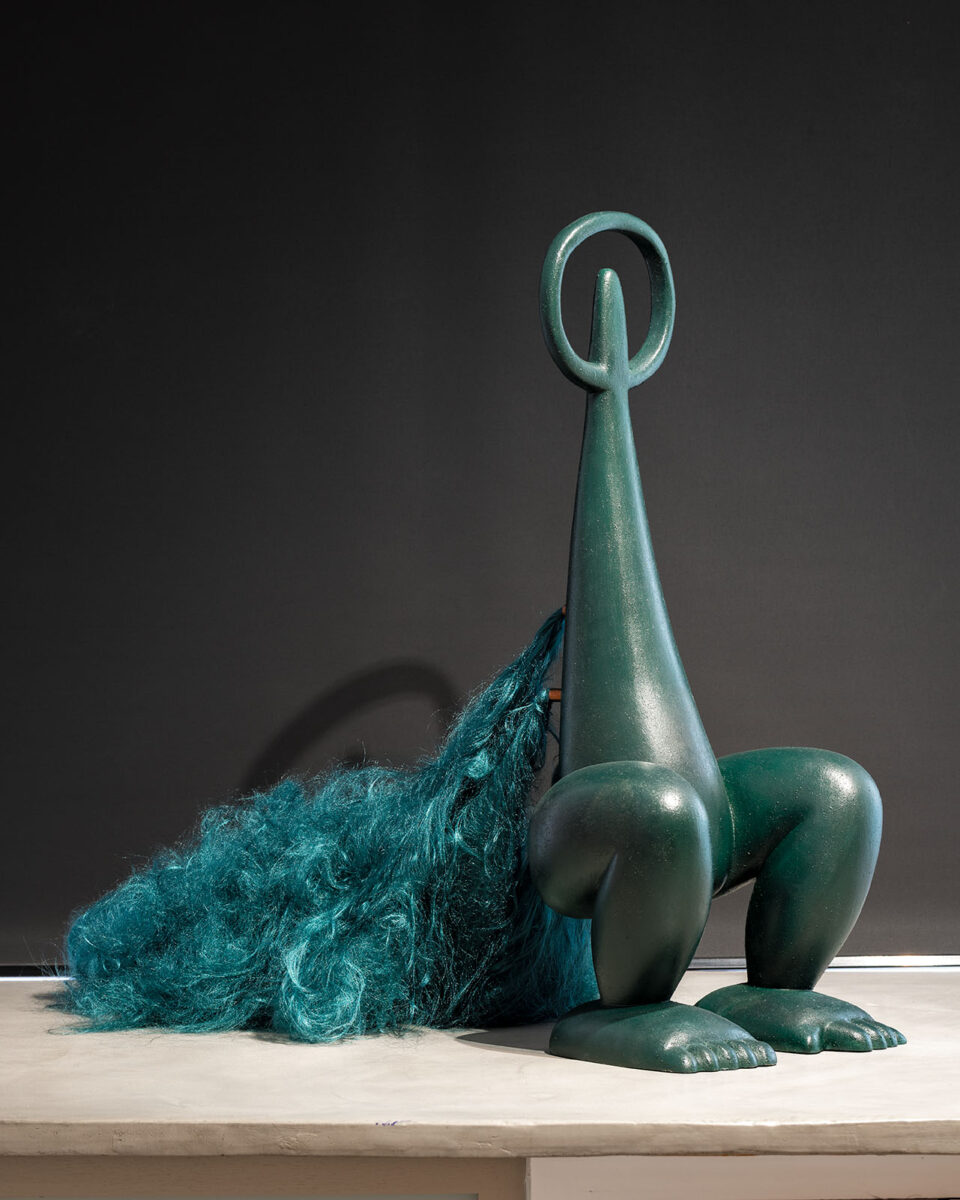
Kalisya 3, The Thousand Faces series, 2024. Sculptures in Gmelina wood, special columbite-tantalite acrylic paint, banana floral stem fibres, copper
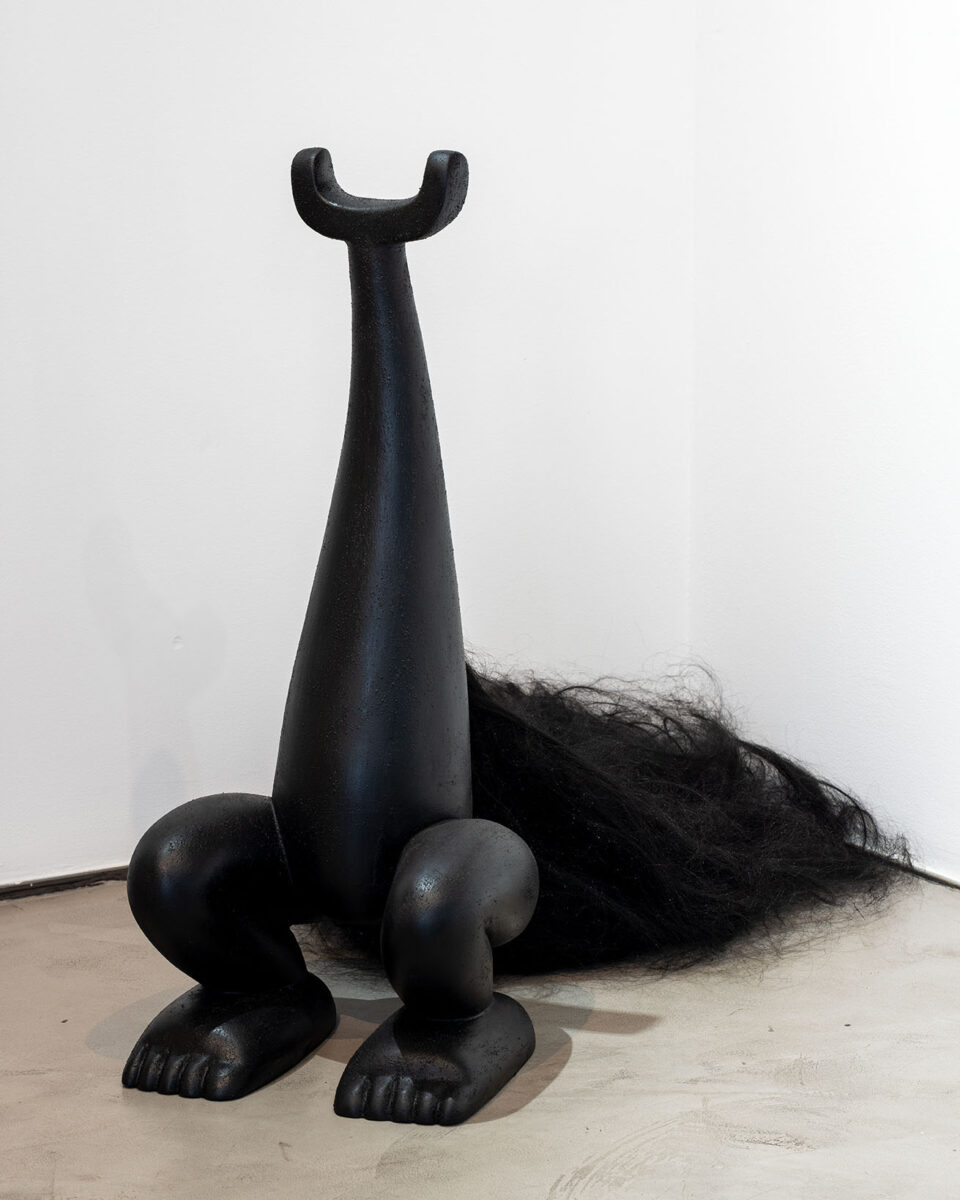
Kalisya 4. The Thousand Faces series, 2024. Sculptures in Gmelina wood, special columbite-tantalite acrylic paint, banana floral stem fibres, copper
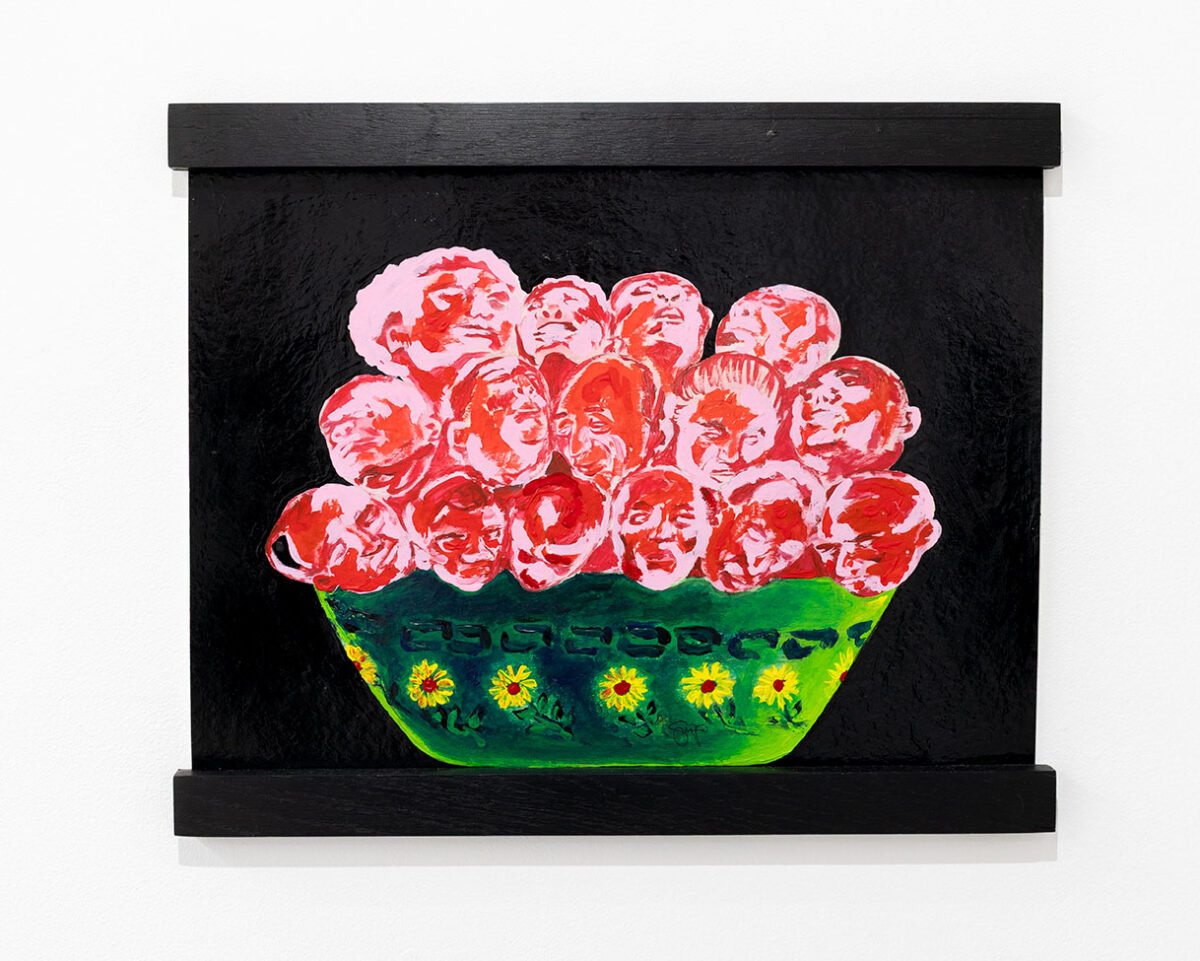
“He would stuff bits of obscene phrases into every gesture.”Soni Labou Tansi. The Pedestal is a Flowerpot series, 2025. Print and acrylic paint on Hahnemühle Torchon paper, 285 g/m²
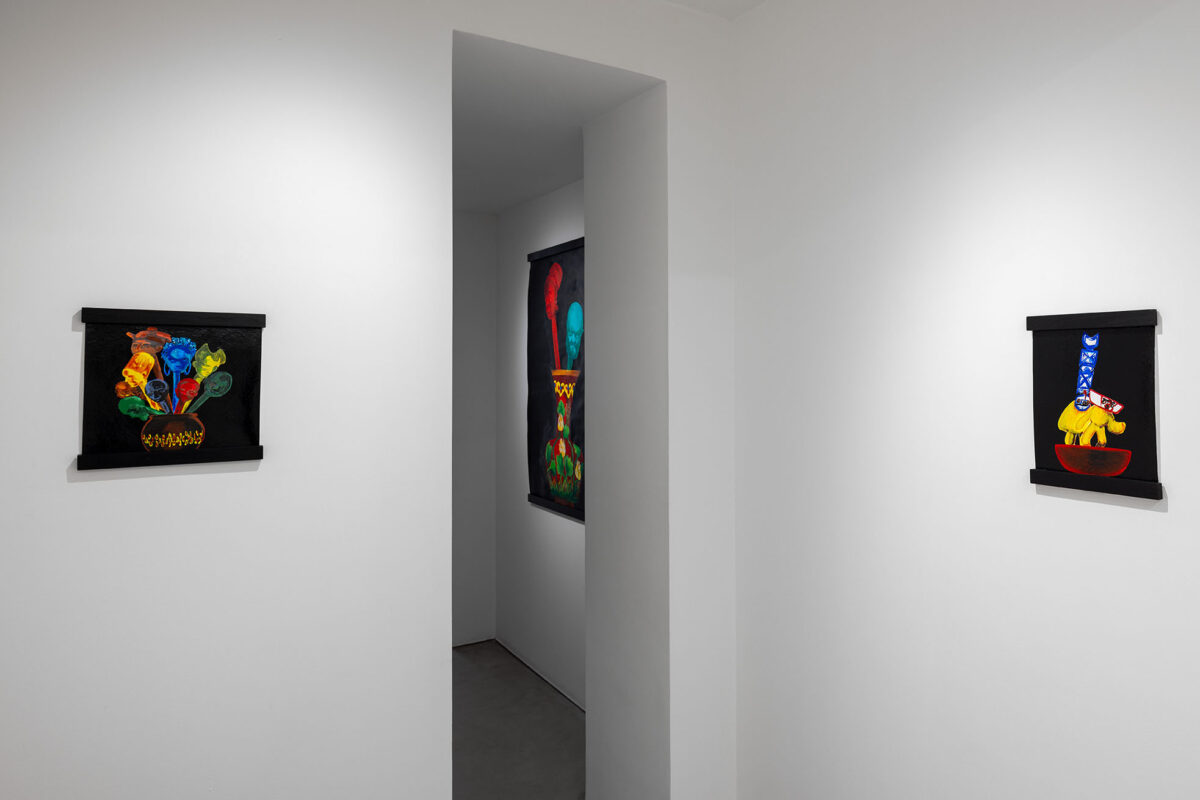
Exhibition view, Une archéologie de la nuit
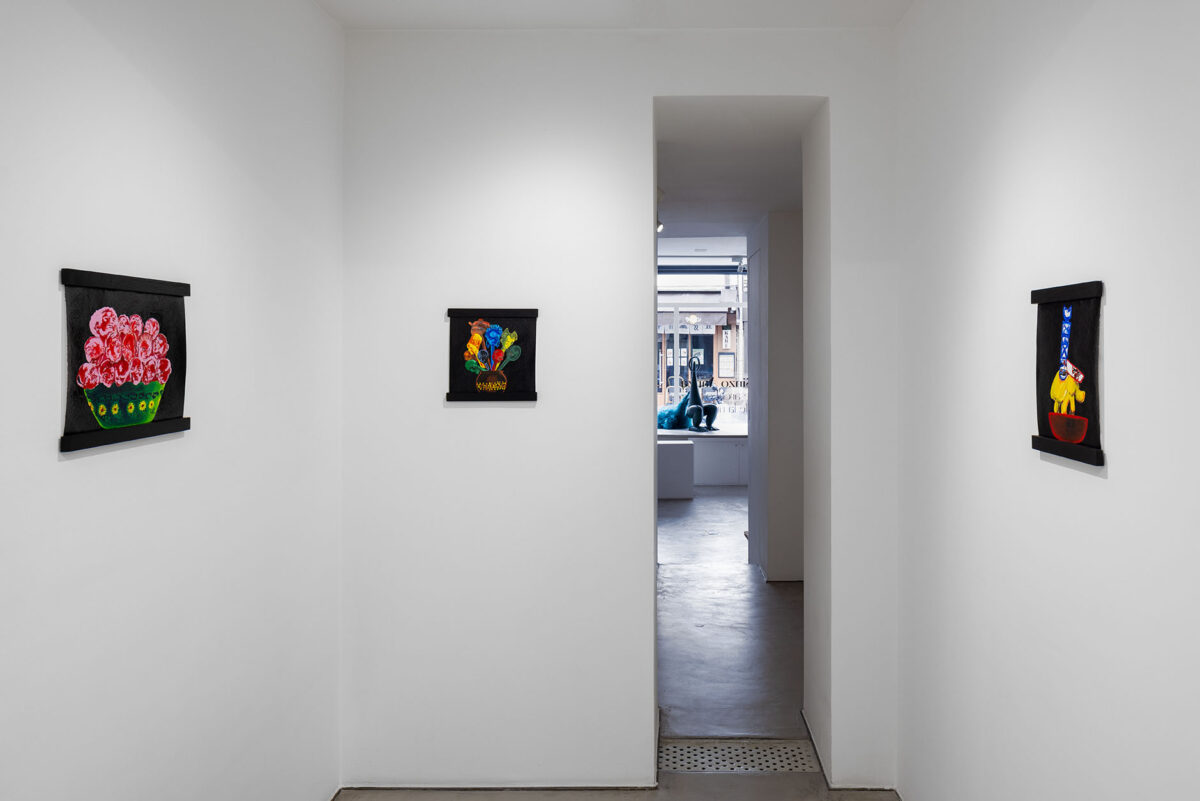
Exhibition view, Une archéologie de la nuit
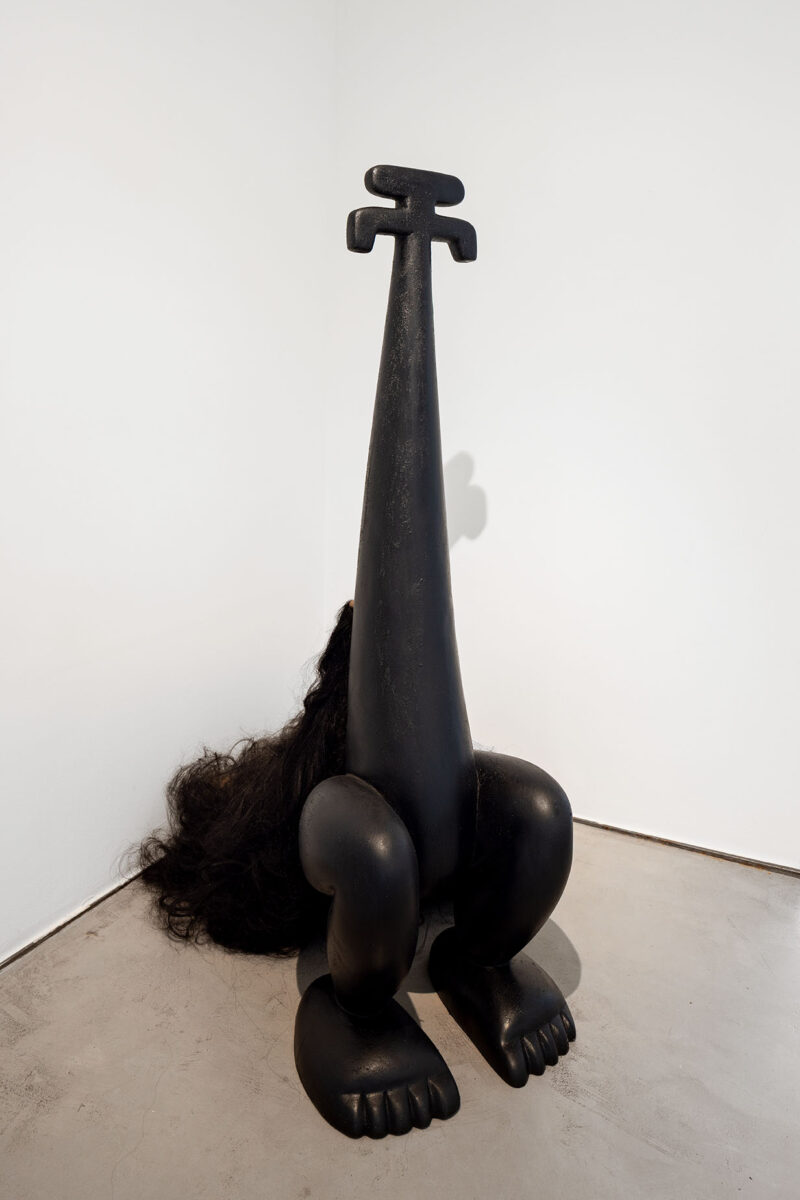
Kalisya 2. The Thousand Faces series, 2024. Sculptures in Gmelina wood, special columbite-tantalite acrylic paint, banana floral stem fibres, copper
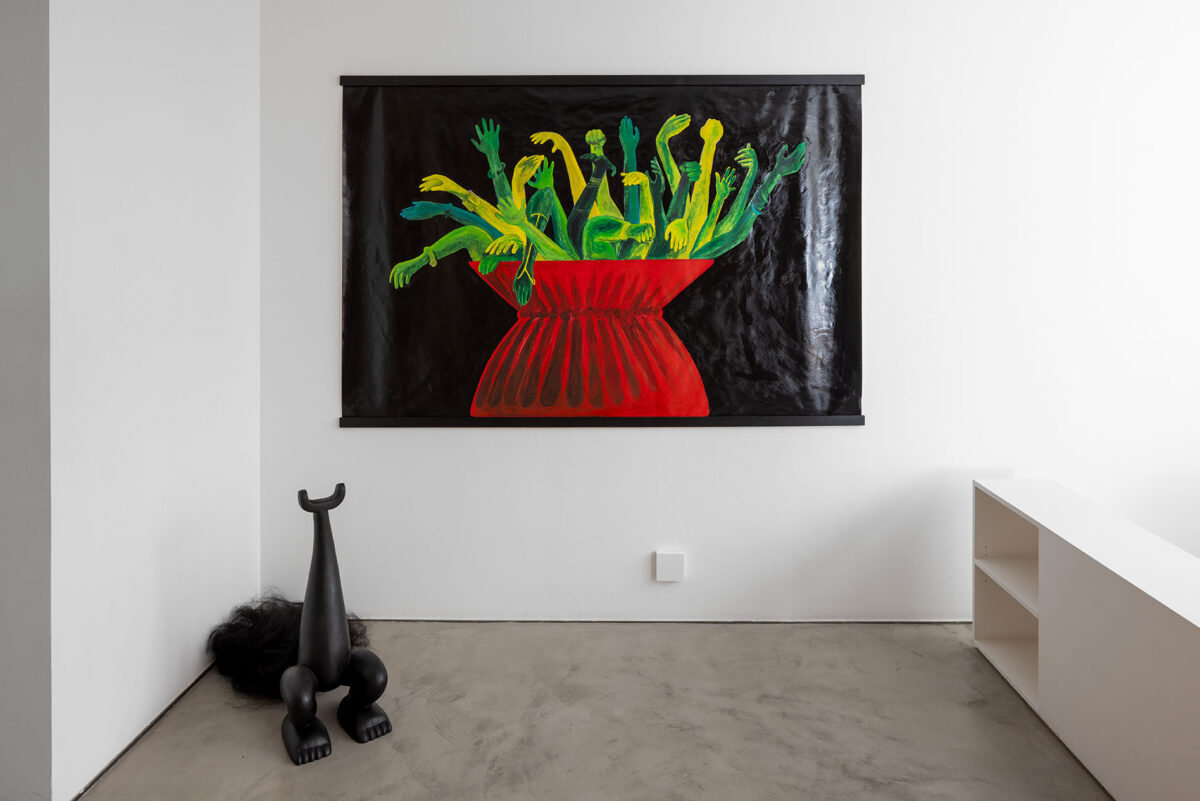
“The forest was a school to which they often came to hear what it had to tell them: You take, you give, for if you only take without giving back, you will leave the giver exhausted unto death.” Ngũgĩ wa Thiong’o. The Pedestal is a Flowerpot series, 2025. Print and acrylic paint on poster paper, 210 g/m²
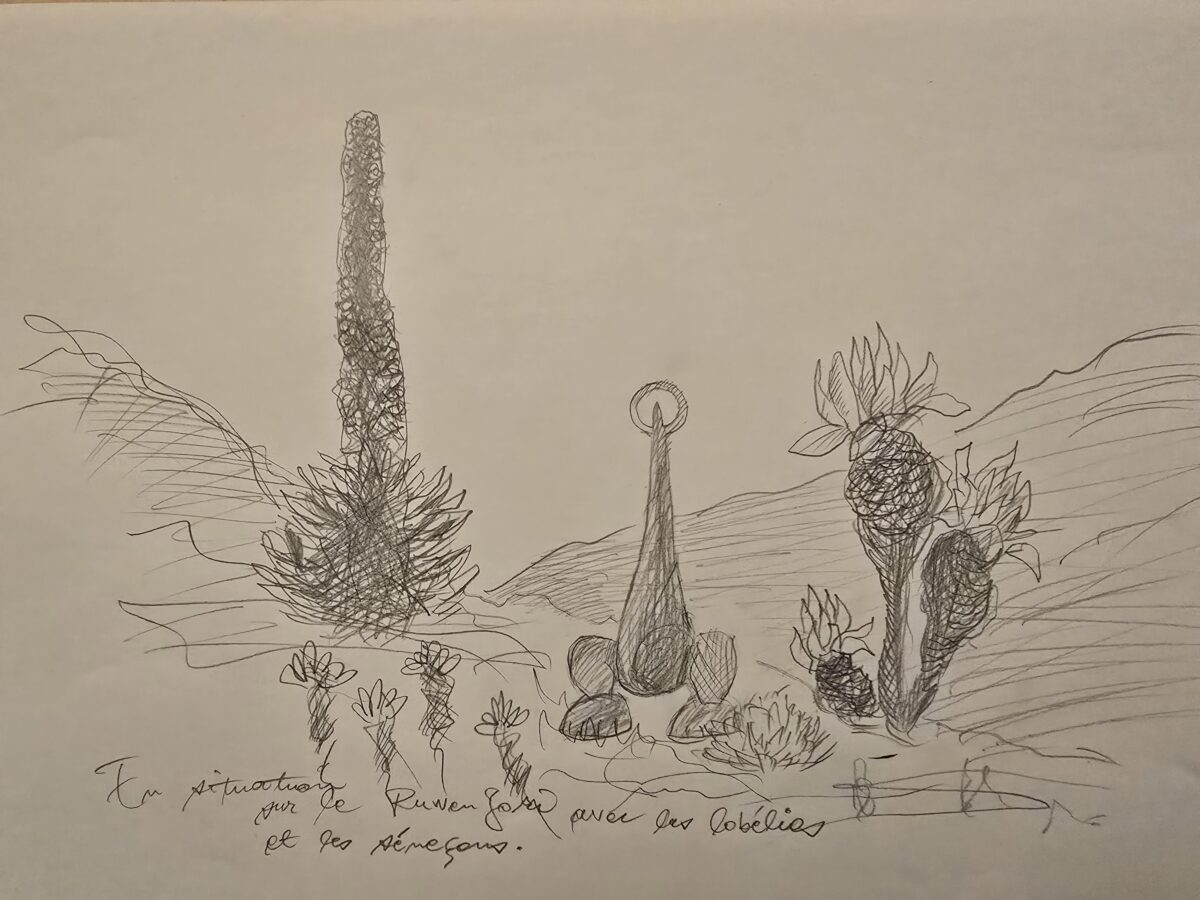
Sketch for the sculpture series Kalisya, The Thousand Faces, 2024.
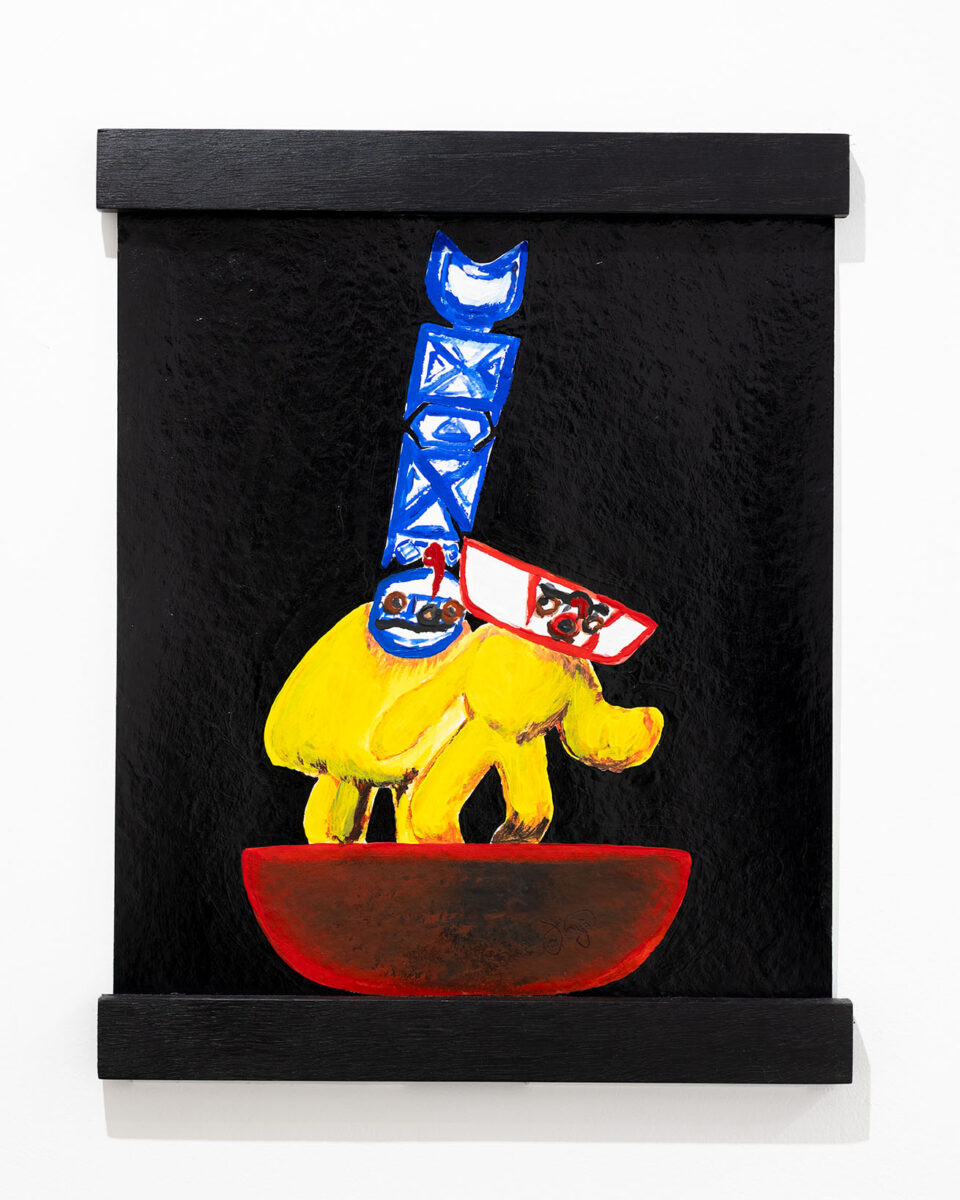
“The measure of a man is what he does with power.” Plato. The Pedestal is a Flowerpot series, 2025. Print and acrylic paint on Hahnemühle Torchon paper, 285 g/m²
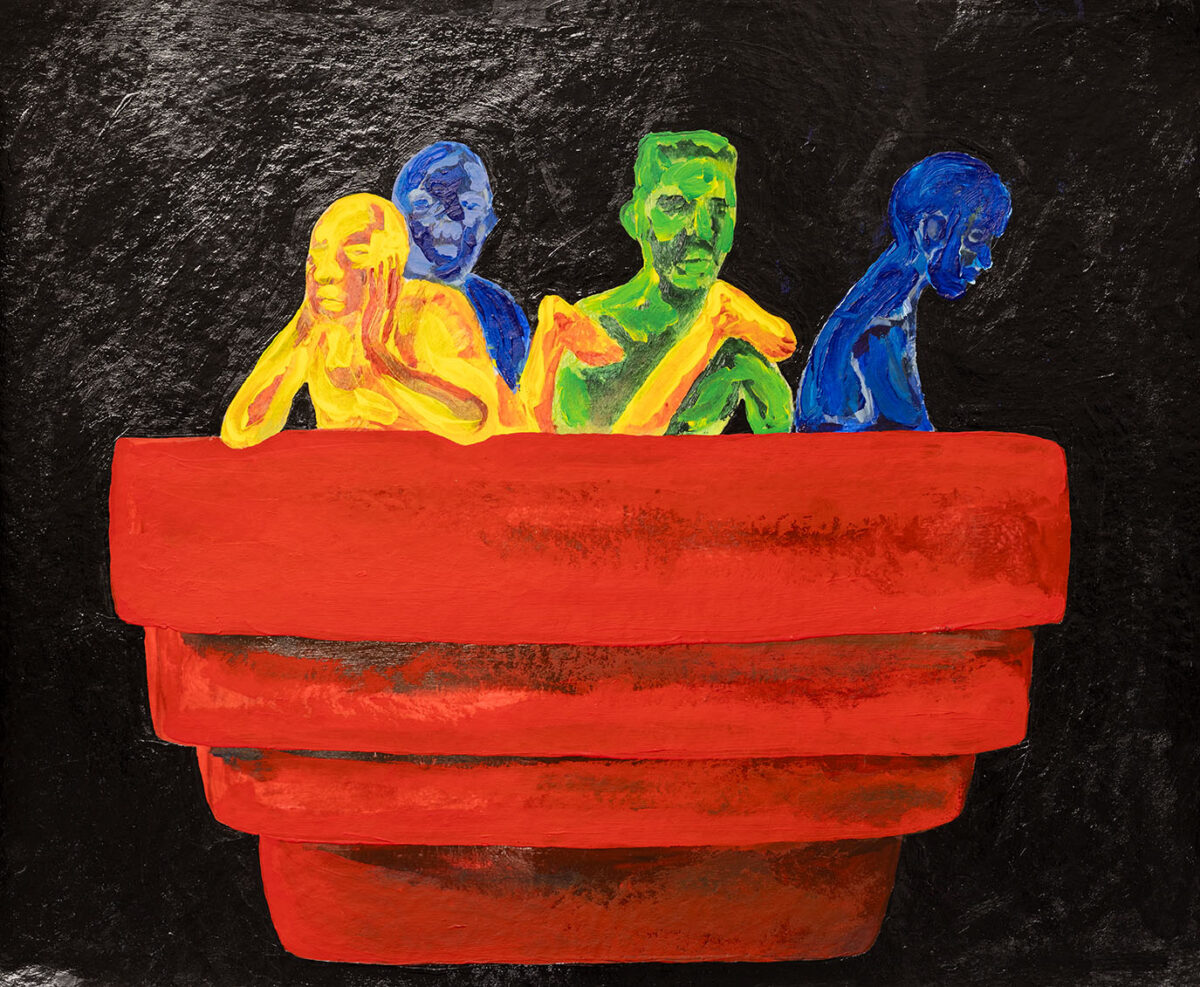
“Order is the pleasure of reason, but disorder is the delight of the imagination.” Paul Claudel. The Pedestal is a Flowerpot series, 2025. Print and acrylic paint on Hahnemühle Torchon paper, 285 g/m².
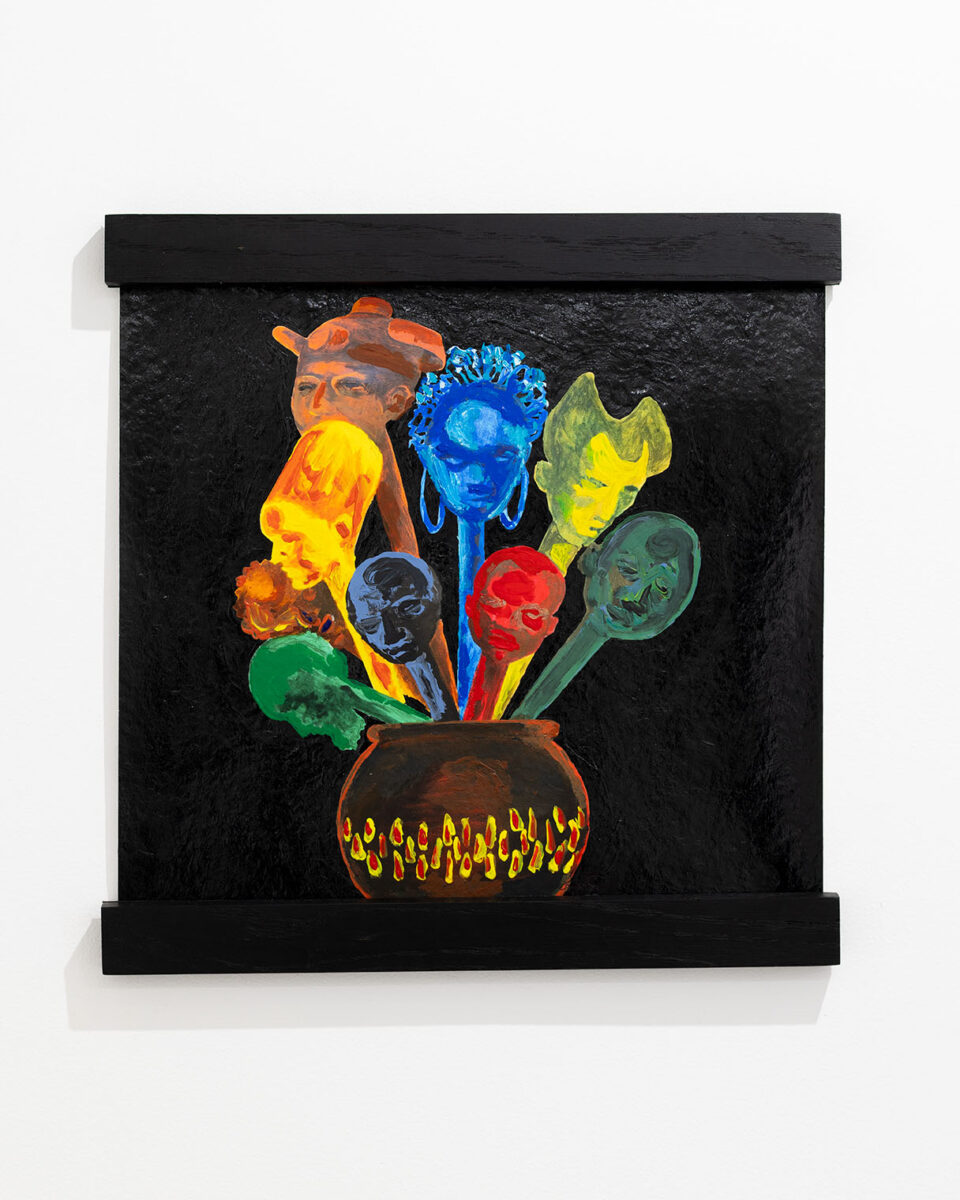
“Here once lay Keta. Now her golden girls Erode into the arms Of strange towns.”Kwesi Brew. The Pedestal is a Flowerpot series. 2025. Print and acrylic paint on Hahnemühle Torchon paper, 285 g/m²
“Stories are not made from common and routine occurrences. Impressionist tales suggest that we learn more from the exceptional than from the topical. In some quarters this is heresy.”John Van Maanen. The Pedestal is a Flowerpot series, 2025. Acrylic on 300 g Canson paper
This exhibition brings together three of Sinzo Aanza’s most recent projects, which explore obscure corners of history—moments when a world shifts, when political, symbolic, and material structures are transformed to the point of becoming almost unrecognizable. Une archéologie de la nuit (An Archaeology of the Night) examines these ruptures not through their official narratives, but through the traces they have left on objects, cosmologies, the psyche and gestures.
The figure of Kalisya appears through the sculptures of the series Kalisya, the Thousand Faces, like the paradoxical spirit of technological modernity: a goddess born in the cosmologies of Kivu, yet now scattered throughout the material circuits of a hyperconnected world.
The Sky Map of Mbwila on 29 October 1665 revisits the 1665 battle between the kingdoms of Kongo and Portugal as a moment of cosmological upheaval, where the end of a local political order ushers in a global modernity that is already corrupt and fractured.
Finally, with the series The Pedestal is a Flowerpot, the artist questions the history of museums and monuments, revealing how the beauty of the objects on display remains linked to the dynamics of conquest, appropriation, colonial knowledge and possession.
Hair, minerals, textiles, heads, displaced objects—the works act as fragments unearthed from a partially buried history. Together, they offer a symbolic excavation of our time, revealing the invisible layers that connect ancient cosmologies, historical catastrophes, and contemporary infrastructures. This exhibition is an attempt to read the night of the world—not as a void, but as an archive.
Exhibition journal