


Installation view of Tessa Mars’ exhibition “La Mue”, Galerie Imane Farès, Paris, 2026. Photo : Tadzio, 2026.
[+]Installation view of Tessa Mars’ exhibition “La Mue”, Galerie Imane Farès, Paris, 2026. Photo : Tadzio, 2026.
[-]Installation view of Tessa Mars’ exhibition “La Mue”, Galerie Imane Farès, Paris, 2026. Photo : Tadzio, 2026.
[+]Installation view of Tessa Mars’ exhibition “La Mue”, Galerie Imane Farès, Paris, 2026. Photo : Tadzio, 2026.
[-]Installation view of Tessa Mars’ exhibition “La Mue”, Galerie Imane Farès, Paris, 2026. Photo : Tadzio, 2026.
[+]Installation view of Tessa Mars’ exhibition “La Mue”, Galerie Imane Farès, Paris, 2026. Photo : Tadzio, 2026.
[-]Installation view of Tessa Mars’ exhibition “La Mue”, Galerie Imane Farès, Paris, 2026. Photo : Tadzio, 2026.
[+]Installation view of Tessa Mars’ exhibition “La Mue”, Galerie Imane Farès, Paris, 2026. Photo : Tadzio, 2026.
[-]Installation view of Tessa Mars’ exhibition “La Mue”, Galerie Imane Farès, Paris, 2026. Photo : Tadzio, 2026.
[+]Installation view of Tessa Mars’ exhibition “La Mue”, Galerie Imane Farès, Paris, 2026. Photo : Tadzio, 2026.
[-]Installation view of Tessa Mars’ exhibition “La Mue”, Galerie Imane Farès, Paris, 2026. Photo : Tadzio, 2026.
[+]Installation view of Tessa Mars’ exhibition “La Mue”, Galerie Imane Farès, Paris, 2026. Photo : Tadzio, 2026.
[-]Installation view of Tessa Mars’ exhibition “La Mue”, Galerie Imane Farès, Paris, 2026. Photo : Tadzio, 2026.
[+]Installation view of Tessa Mars’ exhibition “La Mue”, Galerie Imane Farès, Paris, 2026. Photo : Tadzio, 2026.
[-]Installation view of Tessa Mars’ exhibition “La Mue”, Galerie Imane Farès, Paris, 2026. Photo : Tadzio, 2026.
[+]Installation view of Tessa Mars’ exhibition “La Mue”, Galerie Imane Farès, Paris, 2026. Photo : Tadzio, 2026.
[-]Installation view of Tessa Mars’ exhibition “La Mue”, Galerie Imane Farès, Paris, 2026. Photo : Tadzio, 2026.
[+]Installation view of Tessa Mars’ exhibition “La Mue”, Galerie Imane Farès, Paris, 2026. Photo : Tadzio, 2026.
[-]Installation view of Tessa Mars’ exhibition “La Mue”, Galerie Imane Farès, Paris, 2026. Photo : Tadzio, 2026.
[+]Installation view of Tessa Mars’ exhibition “La Mue”, Galerie Imane Farès, Paris, 2026. Photo : Tadzio, 2026.
[-]Installation view of Tessa Mars’ exhibition “La Mue”, Galerie Imane Farès, Paris, 2026. Photo : Tadzio, 2026.
[+]Installation view of Tessa Mars’ exhibition “La Mue”, Galerie Imane Farès, Paris, 2026. Photo : Tadzio, 2026.
[-]Installation view of Tessa Mars’ exhibition “La Mue”, Galerie Imane Farès, Paris, 2026. Photo : Tadzio, 2026.
[+]Installation view of Tessa Mars’ exhibition “La Mue”, Galerie Imane Farès, Paris, 2026. Photo : Tadzio, 2026.
[-]Installation view of Tessa Mars’ exhibition “La Mue”, Galerie Imane Farès, Paris, 2026. Photo : Tadzio, 2026.
[+]Installation view of Tessa Mars’ exhibition “La Mue”, Galerie Imane Farès, Paris, 2026. Photo : Tadzio, 2026.
[-]Installation view of Tessa Mars’ exhibition “La Mue”, Galerie Imane Farès, Paris, 2026. Photo : Tadzio, 2026.
[+]Installation view of Tessa Mars’ exhibition “La Mue”, Galerie Imane Farès, Paris, 2026. Photo : Tadzio, 2026.
[-]Installation view of Tessa Mars’ exhibition “La Mue”, Galerie Imane Farès, Paris, 2026. Photo : Tadzio, 2026.
[+]Installation view of Tessa Mars’ exhibition “La Mue”, Galerie Imane Farès, Paris, 2026. Photo : Tadzio, 2026.
[-]Installation view of Tessa Mars’ exhibition “La Mue”, Galerie Imane Farès, Paris, 2026. Photo : Tadzio, 2026.
[+]Installation view of Tessa Mars’ exhibition “La Mue”, Galerie Imane Farès, Paris, 2026. Photo : Tadzio, 2026.
[-]Installation view of Tessa Mars’ exhibition “La Mue”, Galerie Imane Farès, Paris, 2026. Photo : Tadzio, 2026.
[+]Installation view of Tessa Mars’ exhibition “La Mue”, Galerie Imane Farès, Paris, 2026. Photo : Tadzio, 2026.
[-]Installation view of Tessa Mars’ exhibition “La Mue”, Galerie Imane Farès, Paris, 2026. Photo : Tadzio, 2026.
[+]Installation view of Tessa Mars’ exhibition “La Mue”, Galerie Imane Farès, Paris, 2026. Photo : Tadzio, 2026.
[-]
Installation view of Tessa Mars’ exhibition “La Mue”, Galerie Imane Farès, Paris, 2026. Photo : Tadzio, 2026.
Installation view of Tessa Mars’ exhibition “La Mue”, Galerie Imane Farès, Paris, 2026. Photo : Tadzio, 2026.
Installation view of Tessa Mars’ exhibition “La Mue”, Galerie Imane Farès, Paris, 2026. Photo : Tadzio, 2026.
Installation view of Tessa Mars’ exhibition “La Mue”, Galerie Imane Farès, Paris, 2026. Photo : Tadzio, 2026.
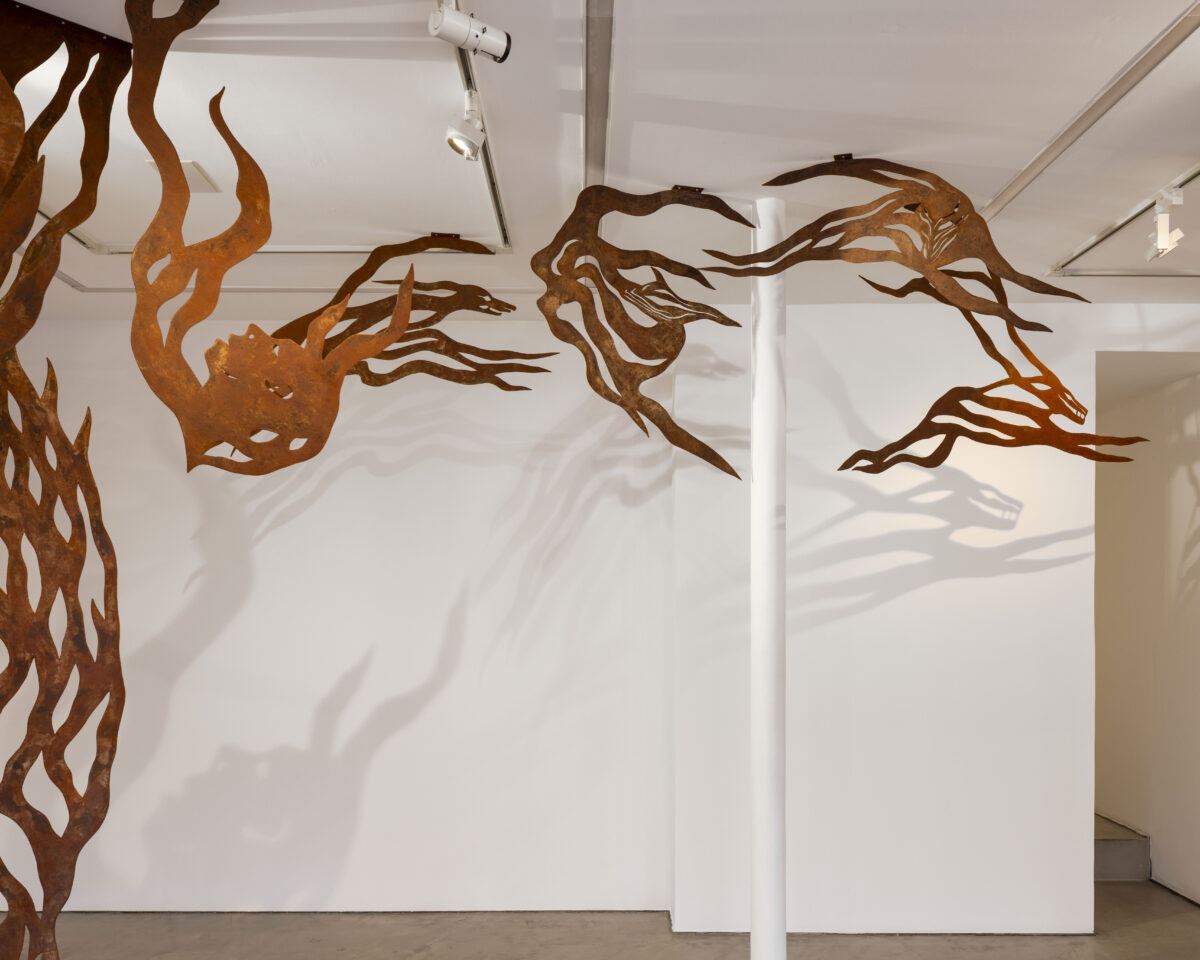
Installation view of Tessa Mars’ exhibition “La Mue”, Galerie Imane Farès, Paris, 2026. Photo : Tadzio, 2026.
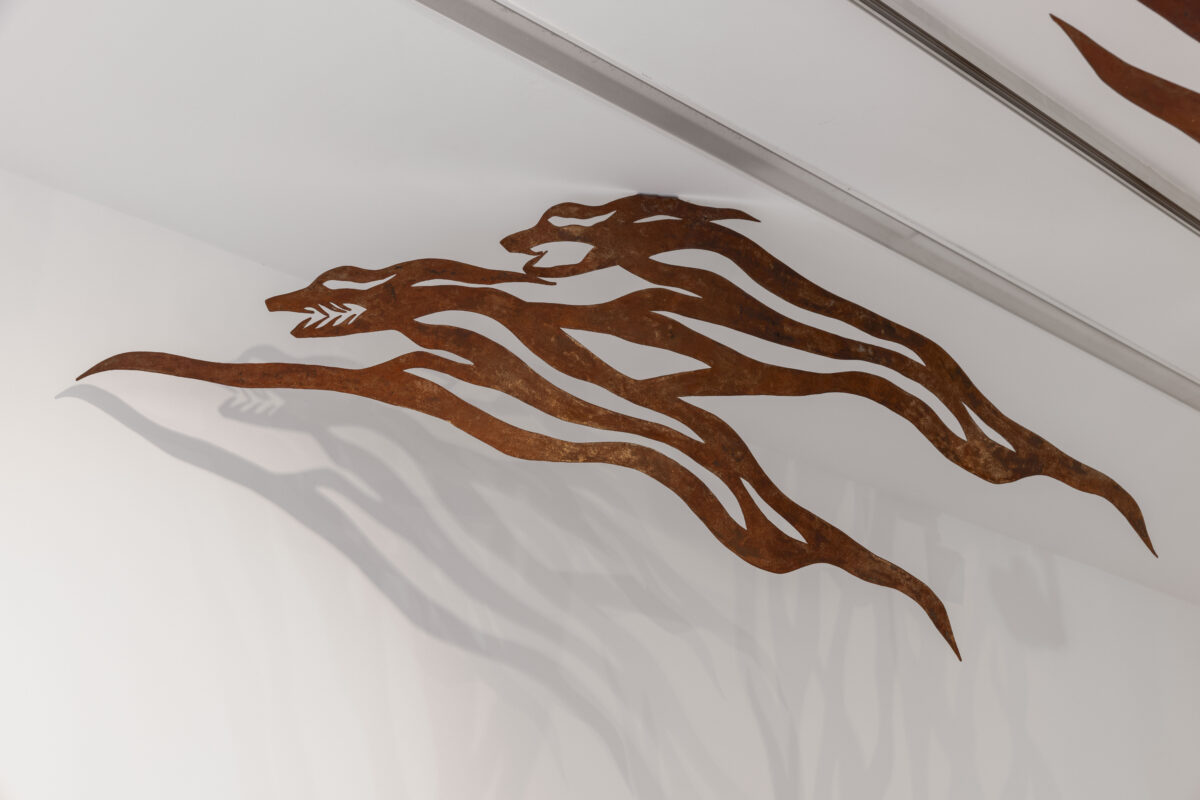
Installation view of Tessa Mars’ exhibition “La Mue”, Galerie Imane Farès, Paris, 2026. Photo : Tadzio, 2026.
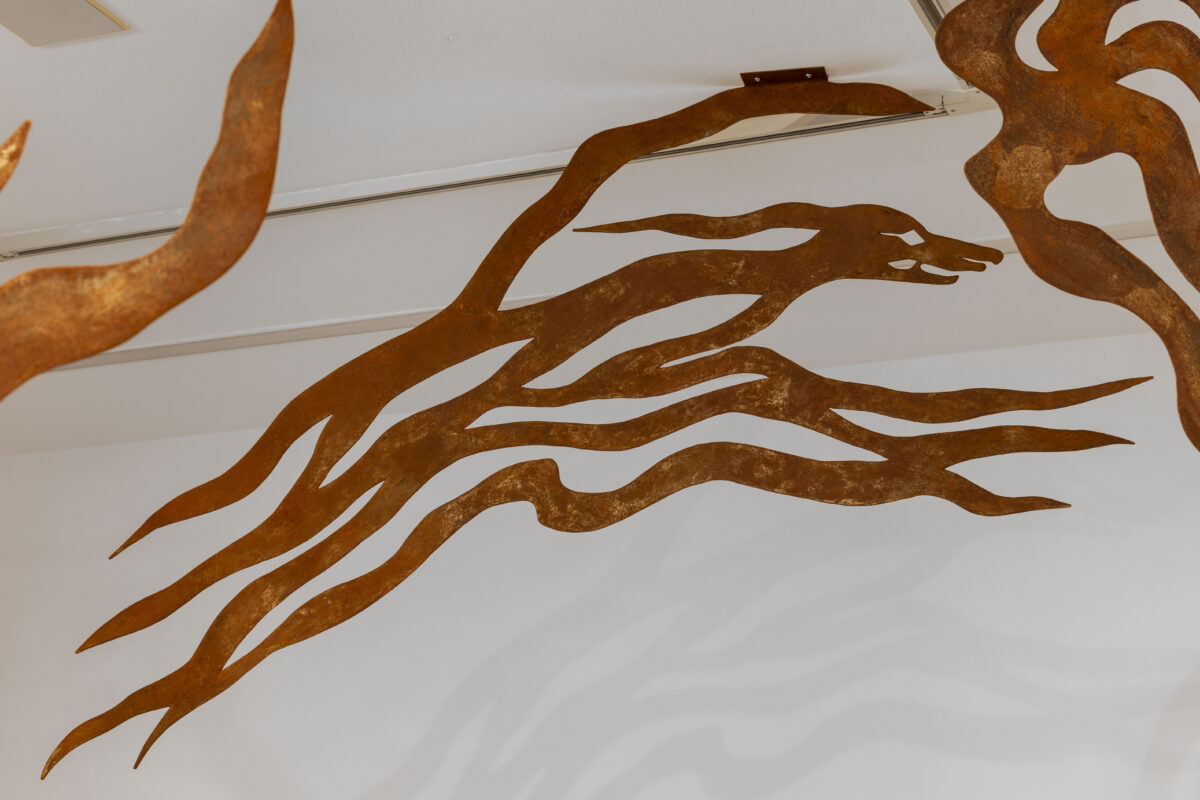
Installation view of Tessa Mars’ exhibition “La Mue”, Galerie Imane Farès, Paris, 2026. Photo : Tadzio, 2026.
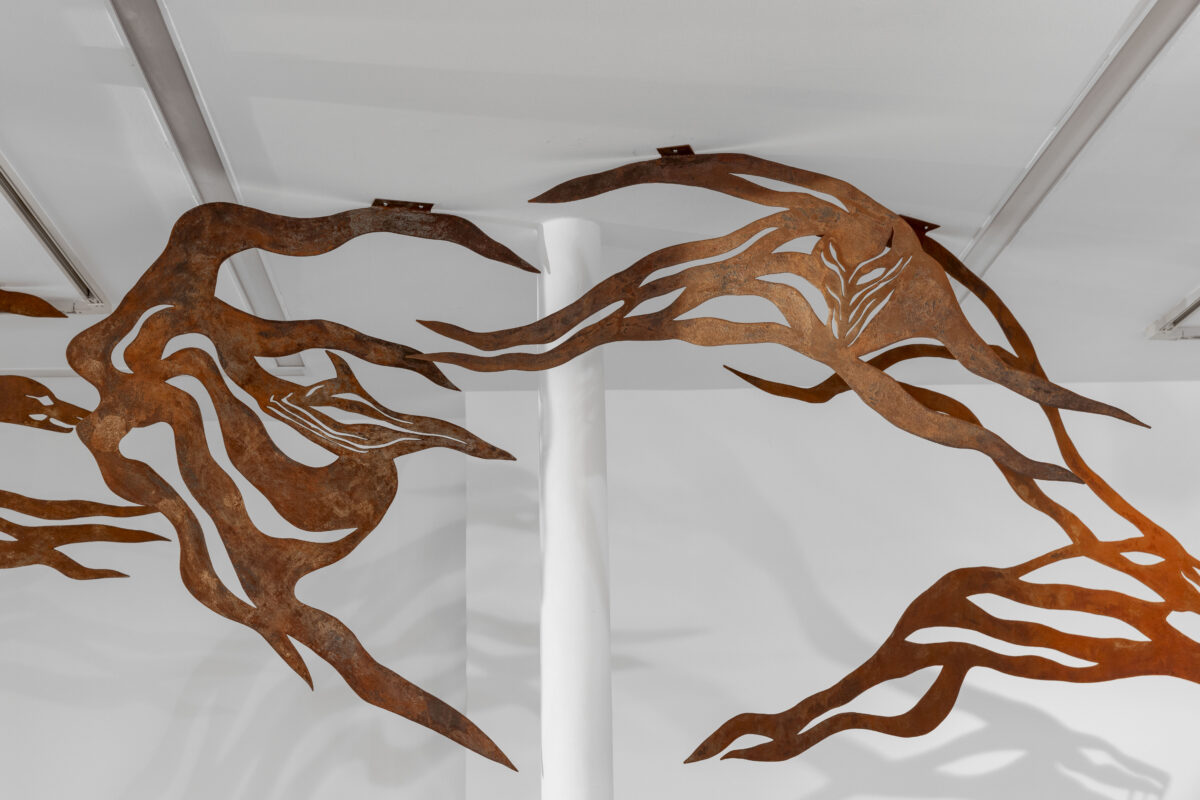
Installation view of Tessa Mars’ exhibition “La Mue”, Galerie Imane Farès, Paris, 2026. Photo : Tadzio, 2026.
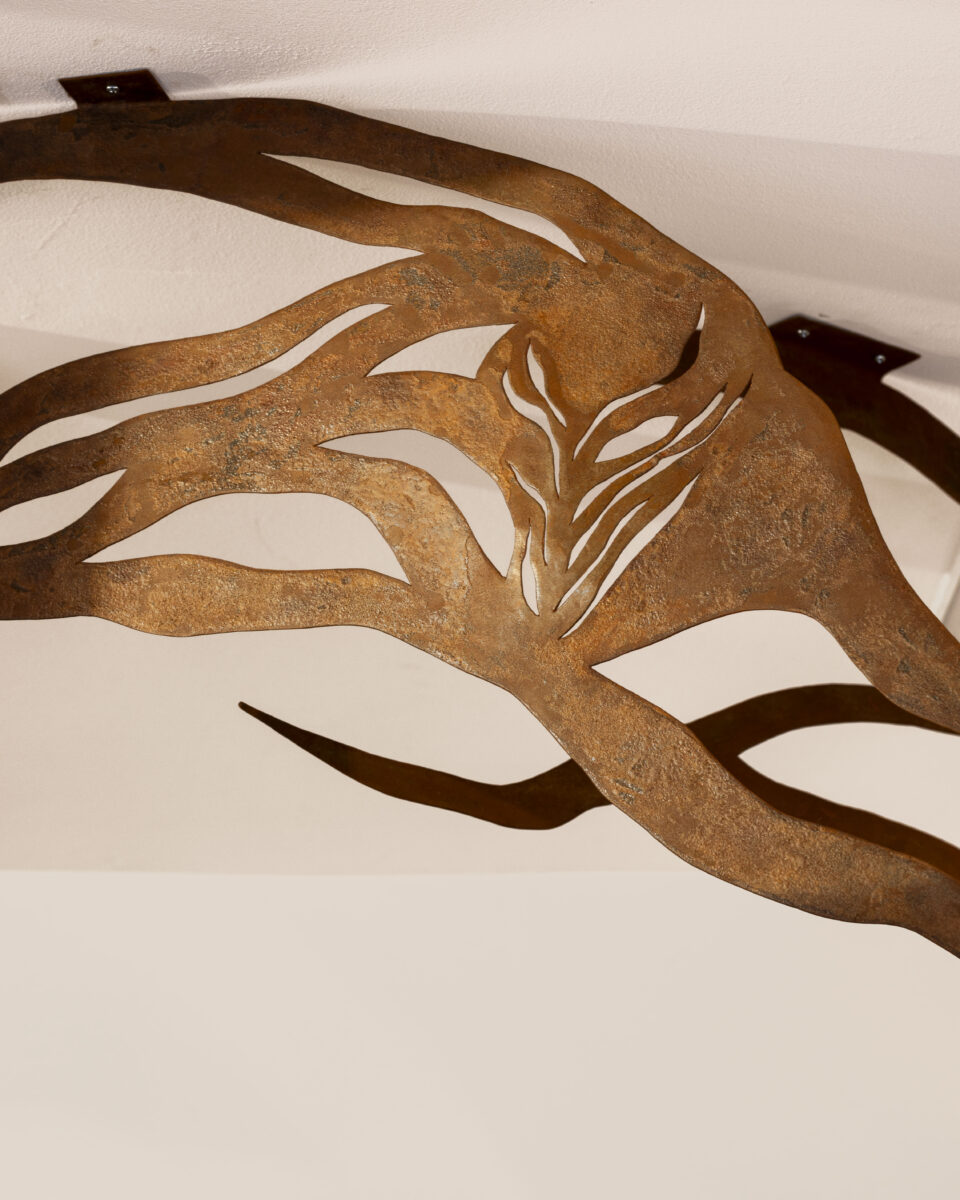
Installation view of Tessa Mars’ exhibition “La Mue”, Galerie Imane Farès, Paris, 2026. Photo : Tadzio, 2026.

Installation view of Tessa Mars’ exhibition “La Mue”, Galerie Imane Farès, Paris, 2026. Photo : Tadzio, 2026.
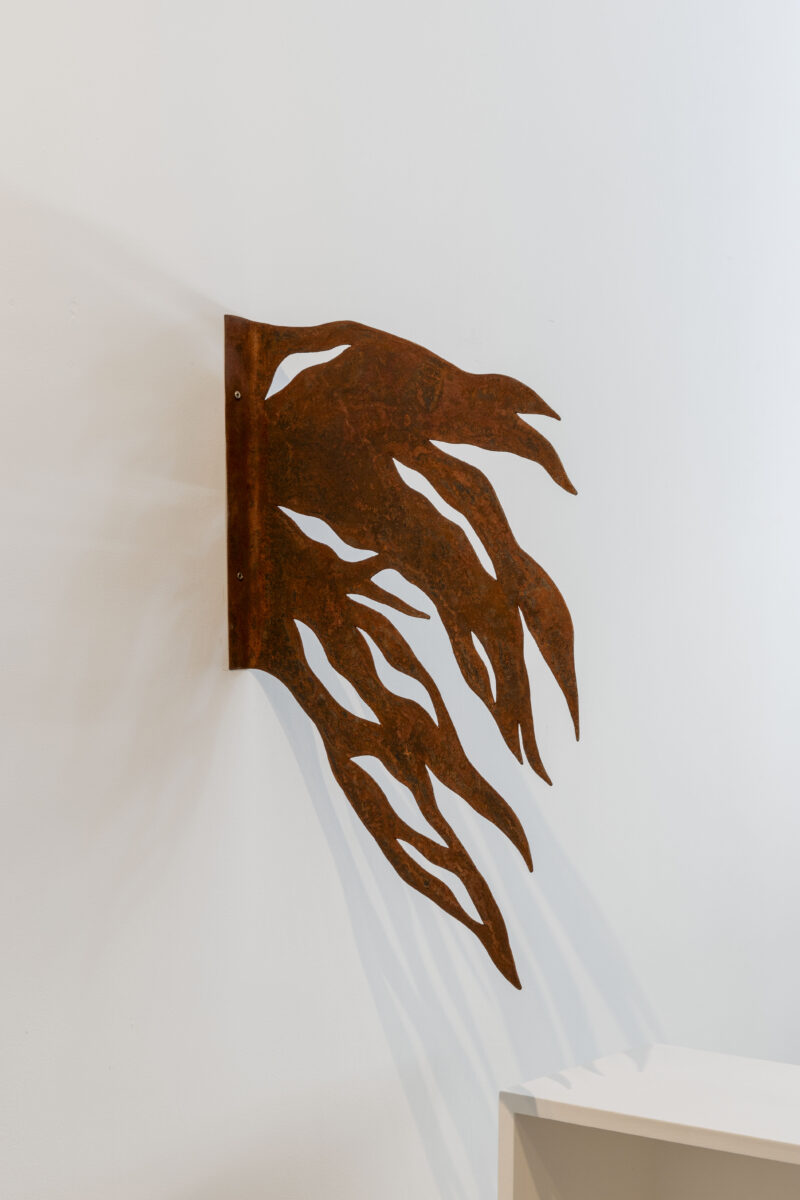
Installation view of Tessa Mars’ exhibition “La Mue”, Galerie Imane Farès, Paris, 2026. Photo : Tadzio, 2026.
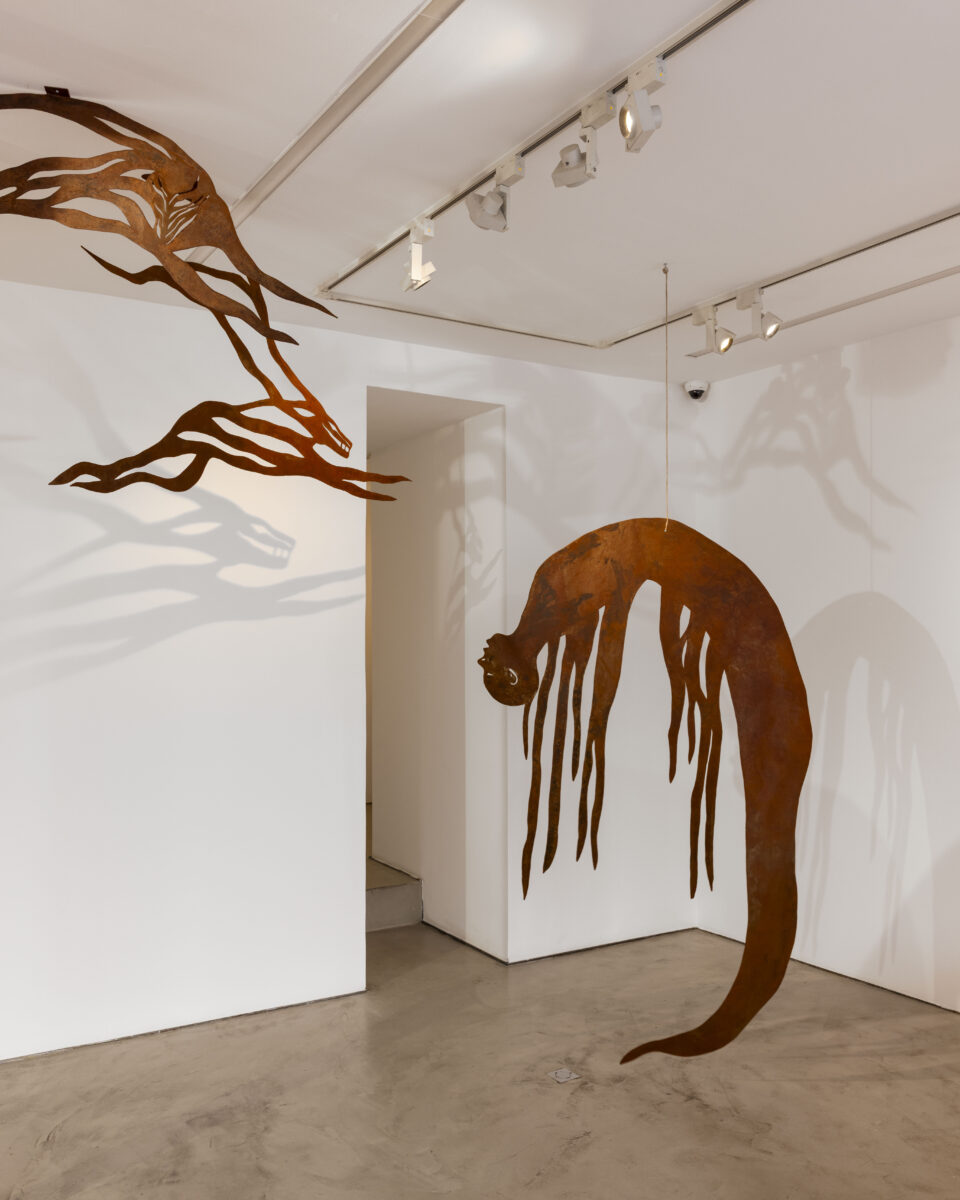
Installation view of Tessa Mars’ exhibition “La Mue”, Galerie Imane Farès, Paris, 2026. Photo : Tadzio, 2026.
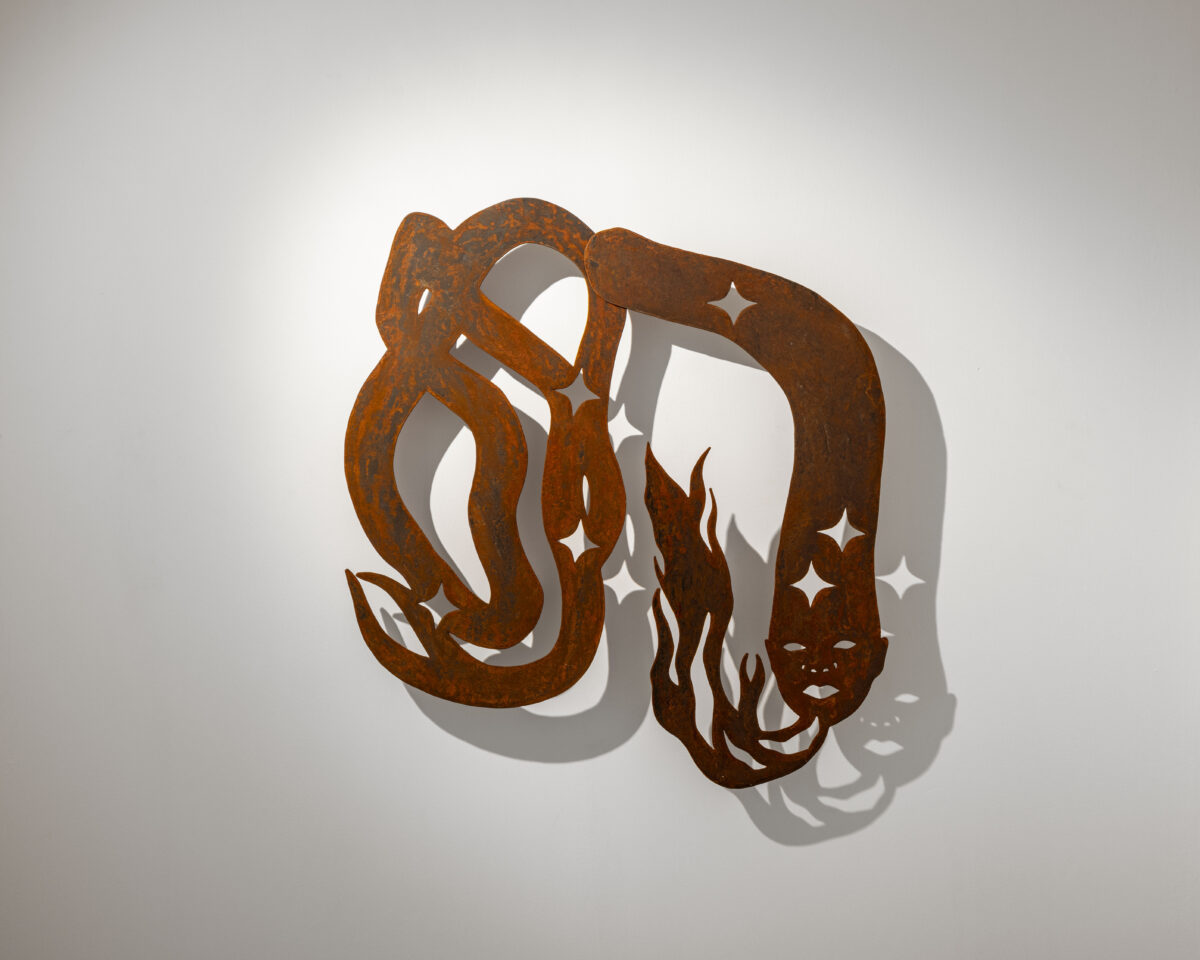
Installation view of Tessa Mars’ exhibition “La Mue”, Galerie Imane Farès, Paris, 2026. Photo : Tadzio, 2026.
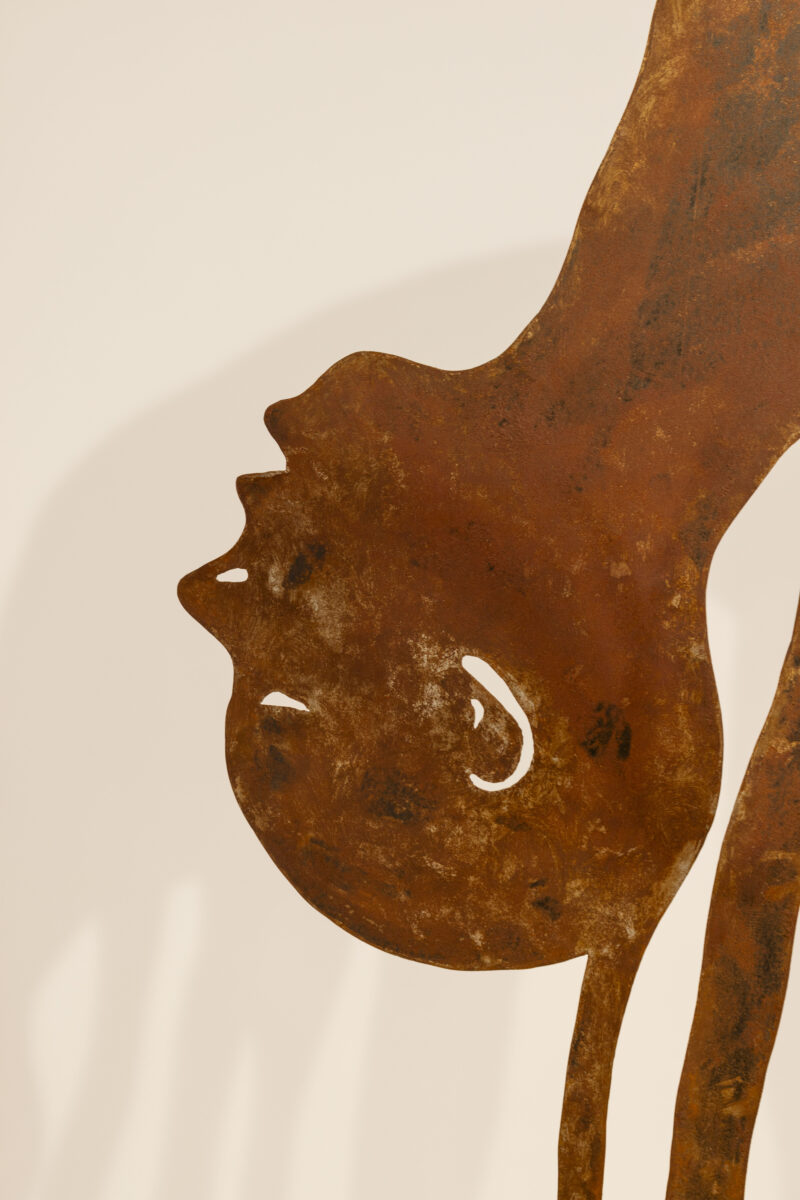
Installation view of Tessa Mars’ exhibition “La Mue”, Galerie Imane Farès, Paris, 2026. Photo : Tadzio, 2026.
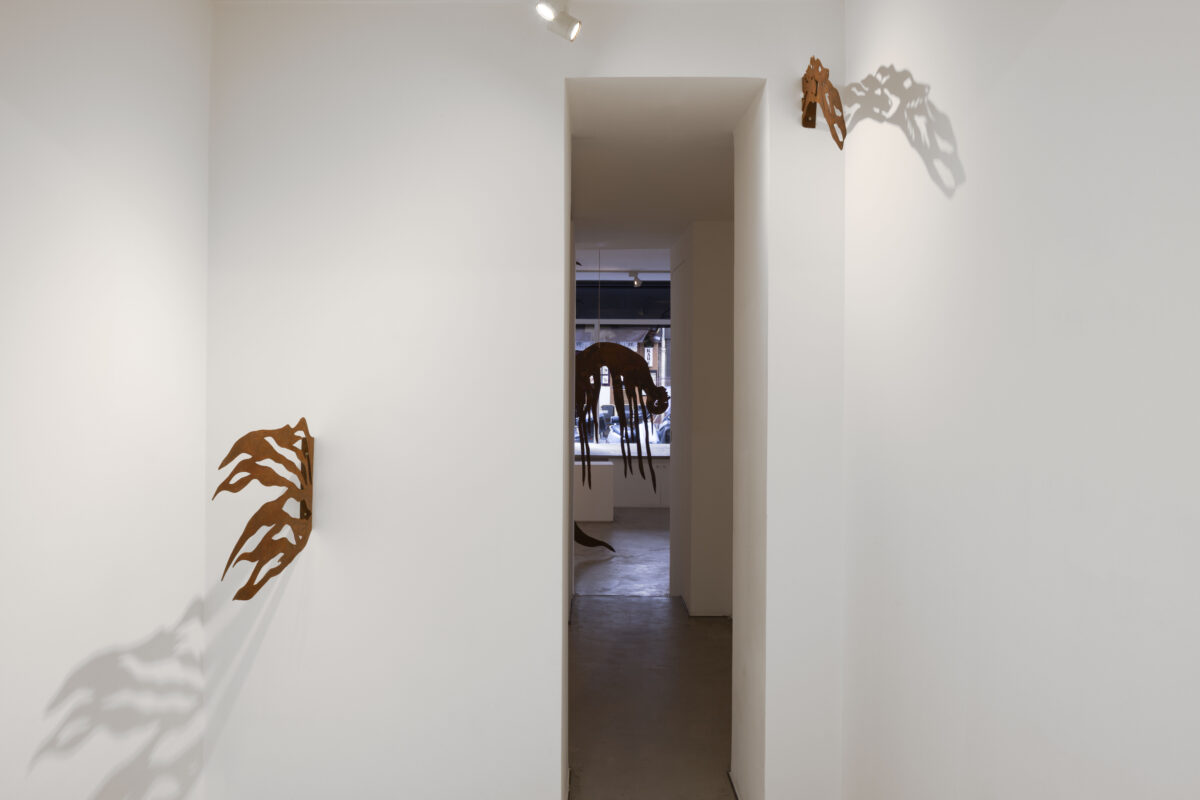
Installation view of Tessa Mars’ exhibition “La Mue”, Galerie Imane Farès, Paris, 2026. Photo : Tadzio, 2026.
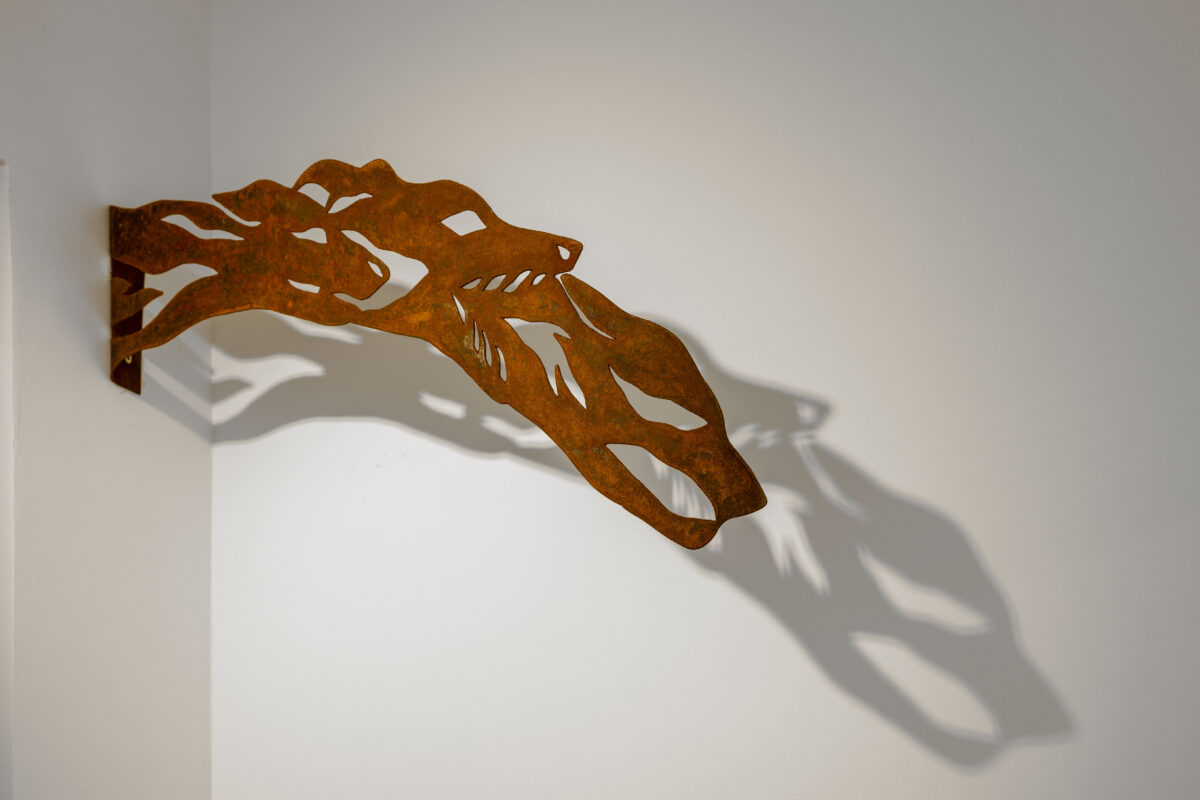
Installation view of Tessa Mars’ exhibition “La Mue”, Galerie Imane Farès, Paris, 2026. Photo : Tadzio, 2026.
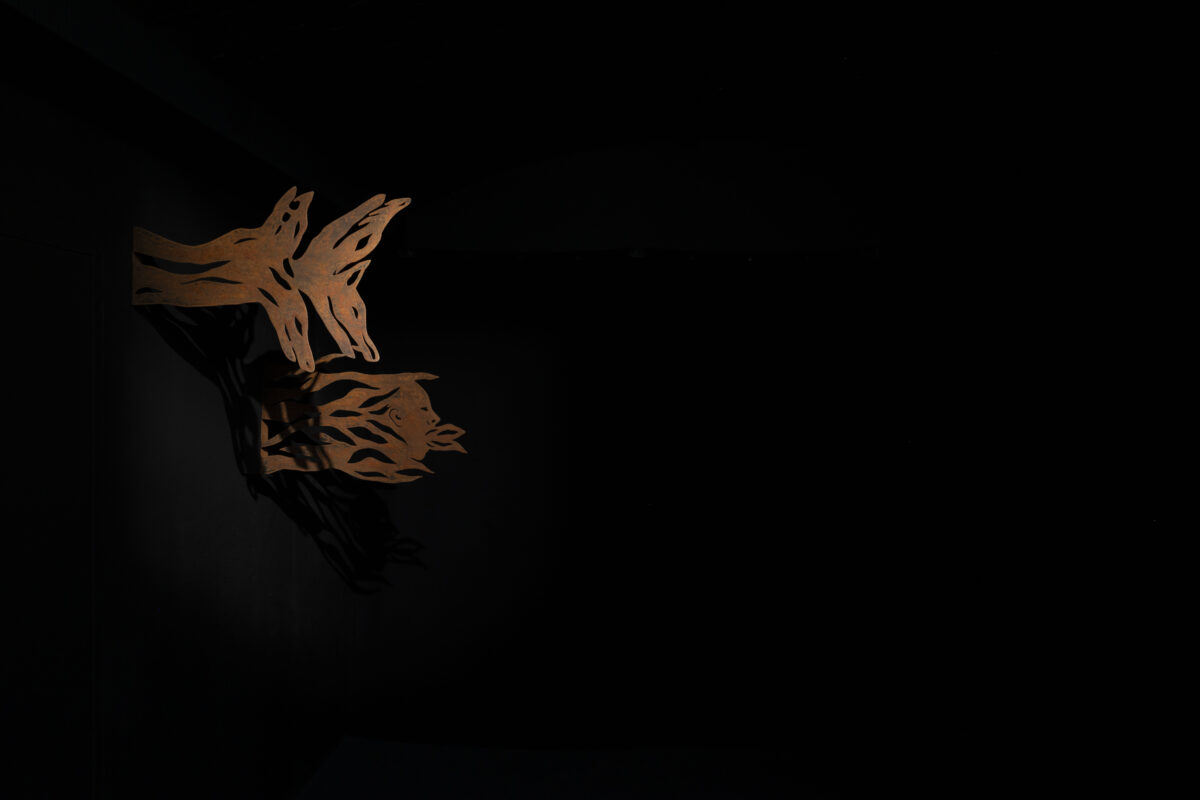
Installation view of Tessa Mars’ exhibition “La Mue”, Galerie Imane Farès, Paris, 2026. Photo : Tadzio, 2026.
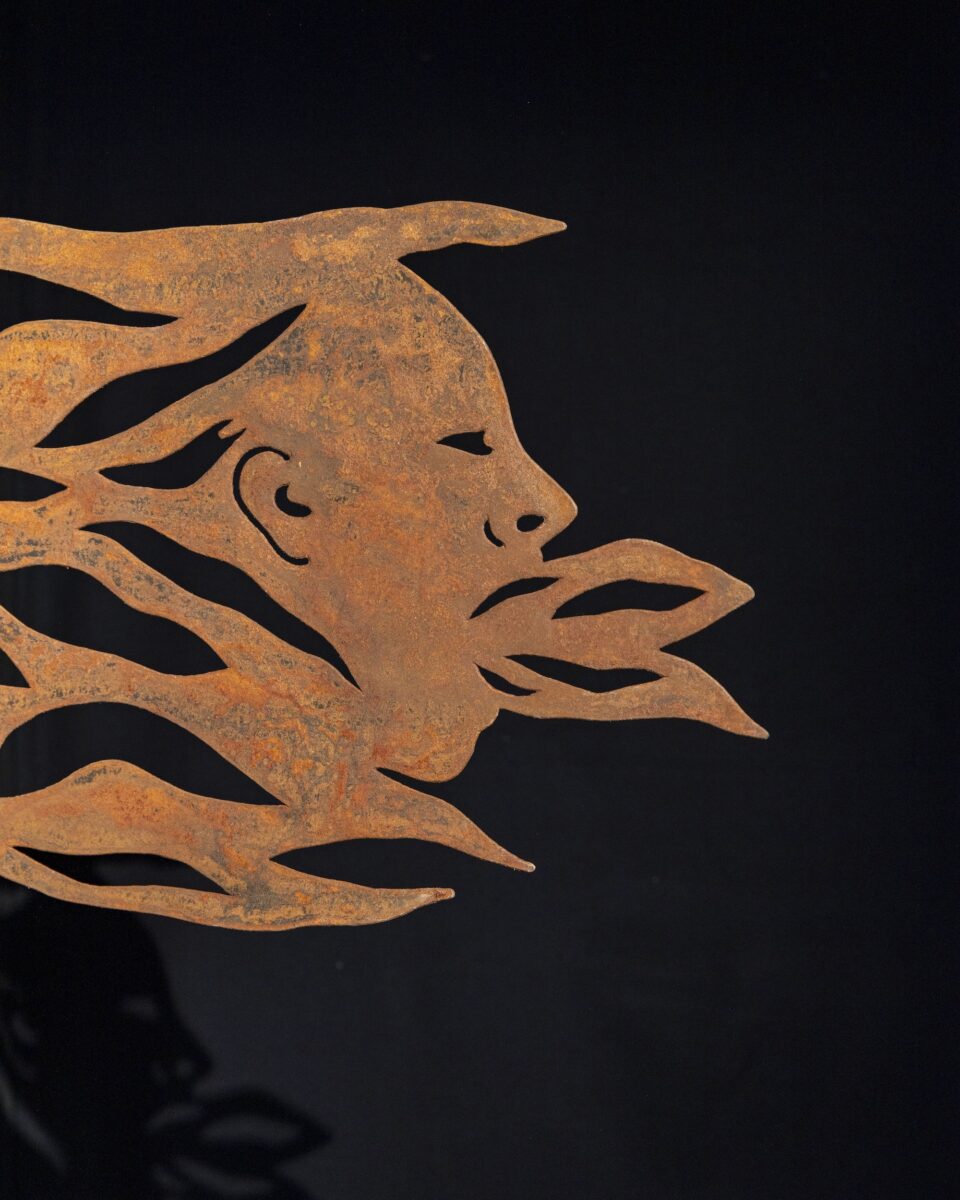
Installation view of Tessa Mars’ exhibition “La Mue”, Galerie Imane Farès, Paris, 2026. Photo : Tadzio, 2026.
Introduction to the exhibition
Tessa Mars’ practice explores the relationship between memory, storytelling, and spirituality. Her work examines how the historical and emotional legacies of the Haitian Revolution continue to shape her relationship to the land, as well as her understanding of survival, adaptability, struggle, and creation. She is interested in the ways myths, beliefs, and legends structure our relationship to both visible and invisible worlds, shaping forms of belonging. Drawing equally on Haitian history and her own lived experience, the artist imagines modes of repair, transformation, and connection.
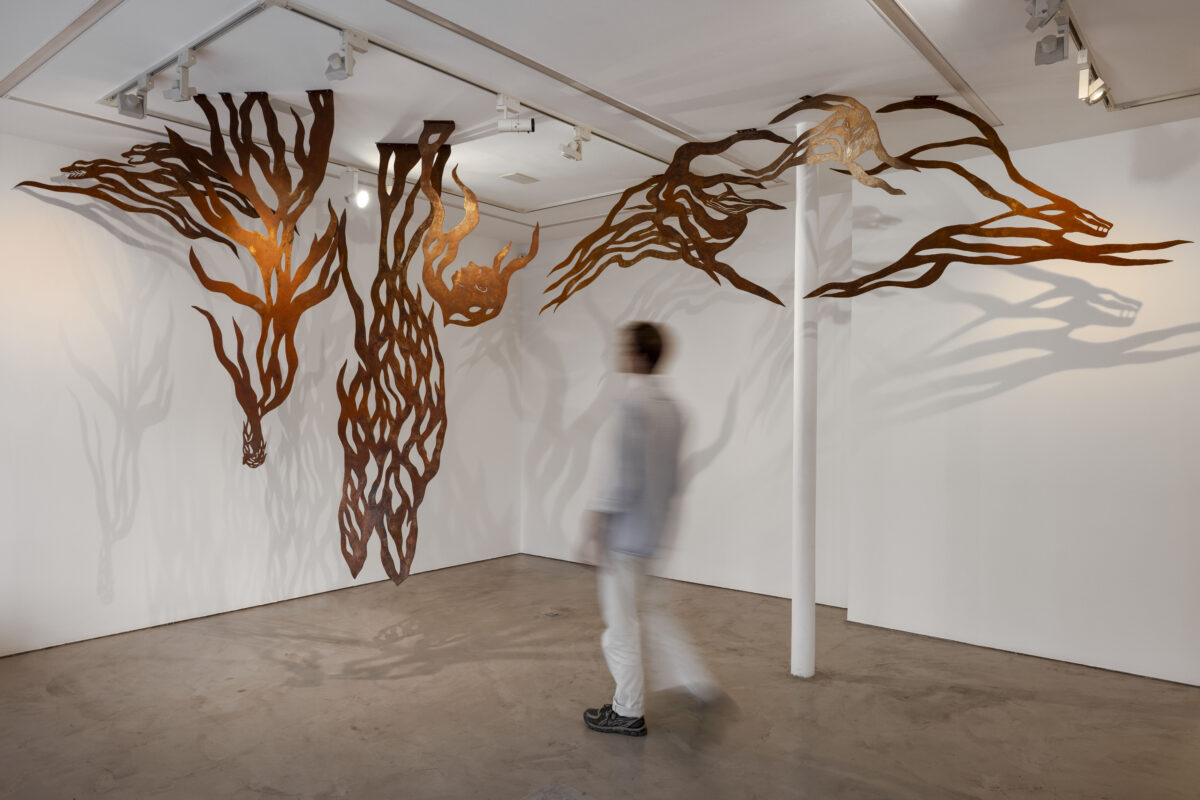
For La Mue (Shedding), the artist presents an installation composed of suspended cut-metal sculptures accompanied by a sound piece. The project emerged from her return to Haiti after several years abroad. The joy of returning home was soon overshadowed by the reality of a country that has been rendered unfamiliar by extreme gang violence, political paralysis, and poverty. The work emerges from this experience of disorientation and from the need to move through loss and grief while learning, once again, how to inhabit a place.
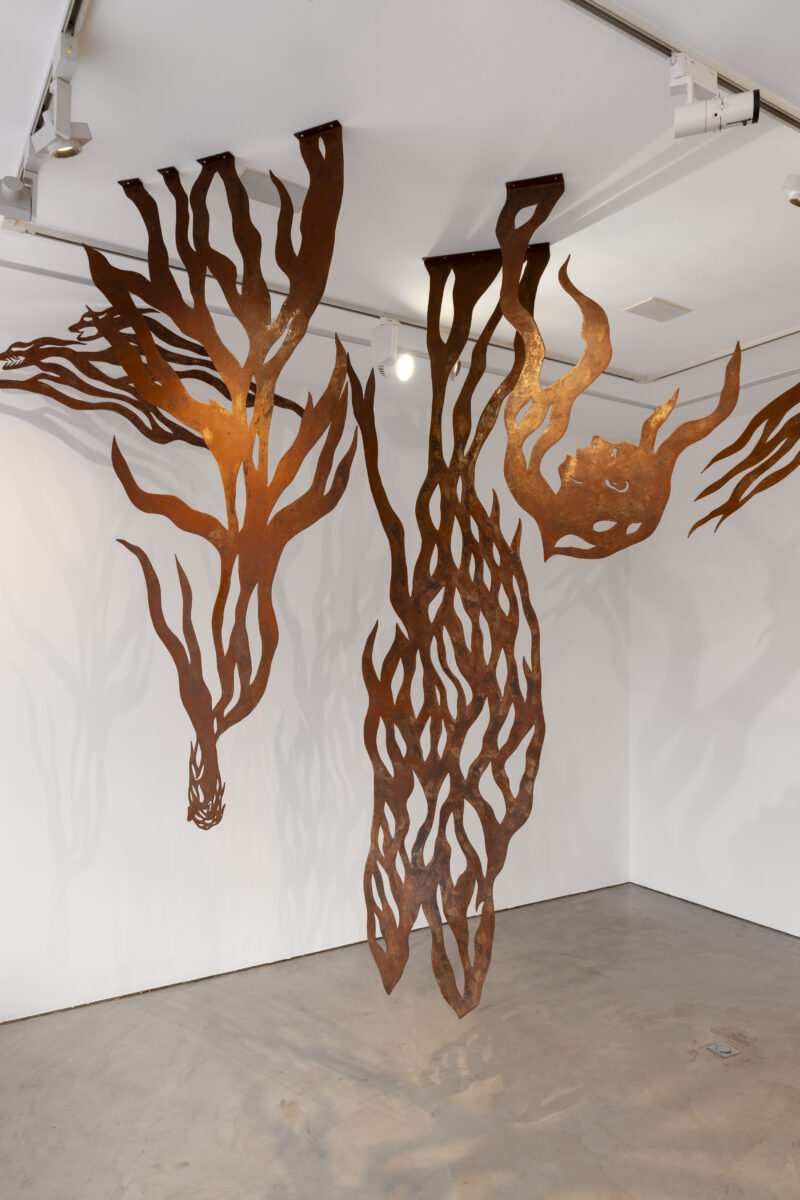
Here, fè dekoupe, or cut metal—a traditional Haitian artistic practice—is introduced into the artist’s work for the first time. Produced in collaboration with Haitian artisans, these suspended forms draw on an imaginary rooted in the artist’s childhood, shaped in particular by the wooden sculptures and cut-metal works her maternal grandmother sold in her shop. These objects also filled the family home. In the evenings, her grandmother would recount folktales and legends populated by fantastical creatures, danger, and metamorphosis. The shadows cast by these sculptures, at once protective and unsettling, have continued to nourish the artist’s imagination into adulthood.
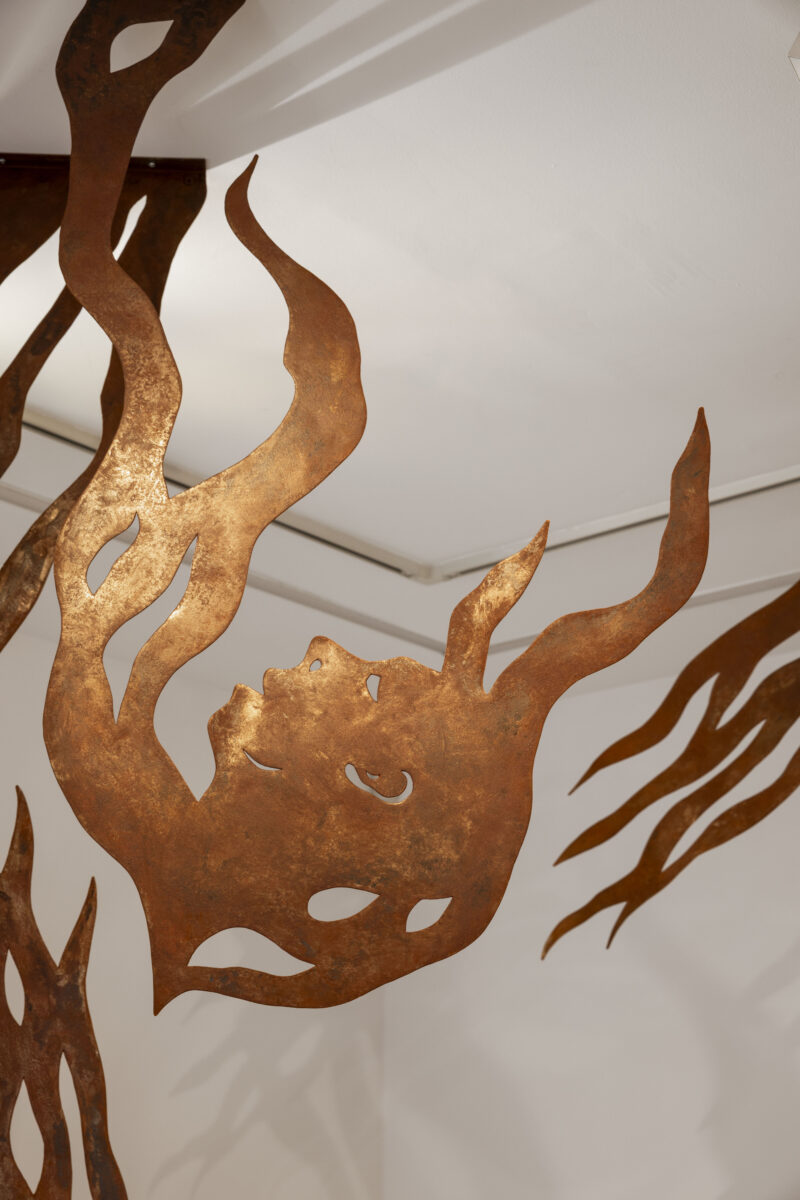
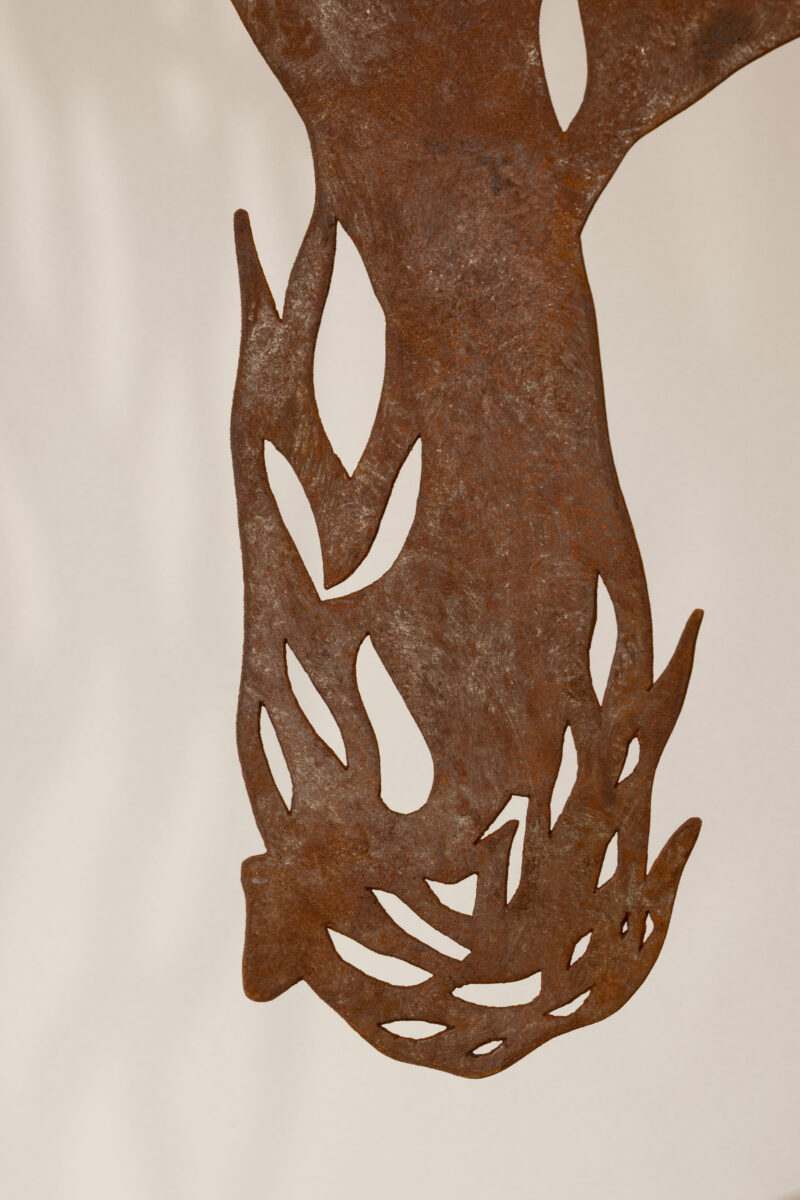
Within the gallery, these figures inhabit the installation as beings that are both heroic and vulnerable, seemingly engaged in a continual process of transformation. Suspended between different states, they depict bodies in the act of becoming, inhabited by human, animal, and spiritual presences. Among them, blazing silhouettes extend a recurring motif in the artist’s practice, where fire evokes both the violence of history—echoing the uprisings of the Haitian Revolution—and the possibility of reinvention. Dogs move through the installation as guardians, watching over this process of transformation. The snake, associated with wisdom and knowledge, traces the movement of change through its cyclical shedding of its skin, the gesture that gives the exhibition its title.
A lullaby the artist’s mother sang to her resonates throughout the gallery, accompanying the installation. This intimate voice becomes a thread connecting memory, protection, and transmission. It situates the work within a sensitive temporality, where the past brushes against the present. The exhibition immerses viewers in this liminal moment, where an old form has been shed but a new one has not yet fully emerged.
Biography of the artist
Tessa Mars is a Haitian visual artist whose work explores questions of gender, landscape, migration, and spirituality in relation to Haiti’s history. She graduated from the University of Rennes 2 (2006) and completed a residency at the Rijksakademie van Beeldende Kunsten (2020–2022). She lives and works in Port-au-Prince.
Her work has been featured in solo exhibitions at Casa del Lago (Mexico City, 2024), Maison Dufort (Port-au-Prince, 2019), the French Institute in Port-au-Prince (2016), and Alice Yard (Port of Spain, 2015).
She has participated in group exhibitions, including at MAC Panama (Panama City, 2026), Ocean Space (Venice, 2025) as part of the TBA21–Academy program, the Museo de Arte Contemporáneo de San Juan (2025), the Denver Art Museum (2022), the South London Gallery (2022), Framer Framed (Amsterdam, 2022), as well as BRIC Arts (Brooklyn, 2018), the Power Plant Gallery at Duke University (Durham, 2018), and the Musée du Panthéon National Haïtien (Port-au-Prince, 2014).
Mars also participated in the 3rd Toronto Biennial of Art (2024), Prospect.6 in New Orleans (2024) and the 10th Berlin Biennale (2018). She was part of the inaugural Haitian Pavilion at the 54th Venice Biennale (2011).
La Mue is Tessa Mars’ first solo exhibition in France.
Exhibition journal